
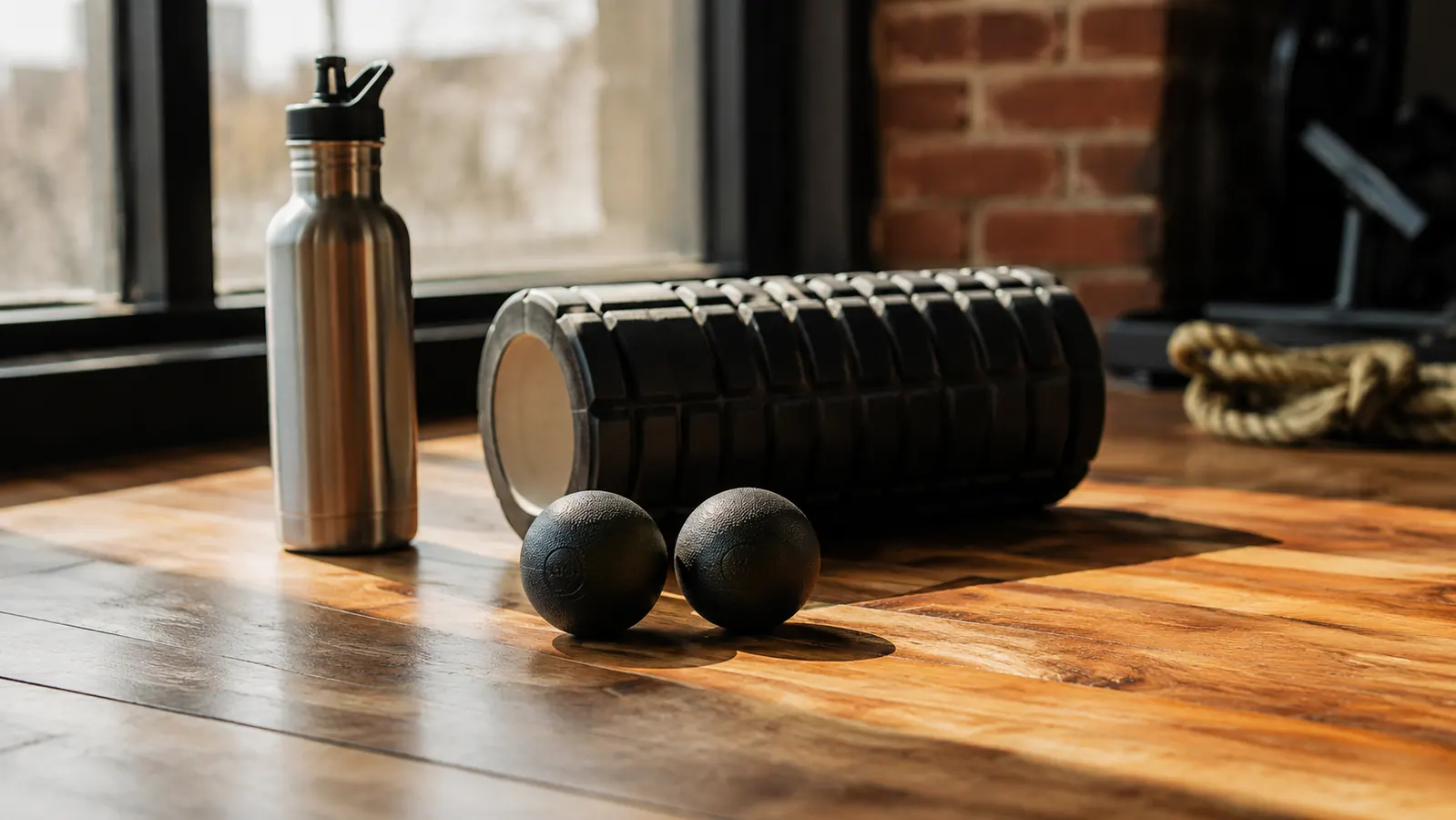
I first picked up the Acupoint Massage Therapy Ball Set of 2 in early March after a particularly brutal deadlift session left my right glute locked up for three days straight. Foam rolling wasn't cutting it. The massage gun helped, but it couldn't get precise enough to dig into the actual hot spot. A buddy at my gym suggested a lacrosse ball. I looked it up, found the Acupoint set rated 4.5 stars from over 5,000 reviewers, and figured at a low price it was worth finding out whether a dedicated trigger point ball actually delivered anything a sports store lacrosse ball couldn't. That was four months ago. I've used at least one of the two balls every single day since.
This review covers what I've learned using these balls daily on plantar fascia, glutes, pecs, and the thoracic spine knots I accumulate from heavy pressing. I'll be direct about the limitations. If you want a broader comparison against a manually-operated hook tool, I've written a full breakdown in my Acupoint massage ball vs Theracane comparison as well.
The Quick Verdict
A surprisingly well-made set that earns daily use. The two-ball sizing system is smart, texture is grippy without being harsh, and the price means you can stash a set everywhere. Not ideal for deep glute work on its own, but for the price, nothing beats it.
Amazon Check Today's Price →If your glute or shoulder knot has been stuck for days, this budget set has a better shot at it than your foam roller does.
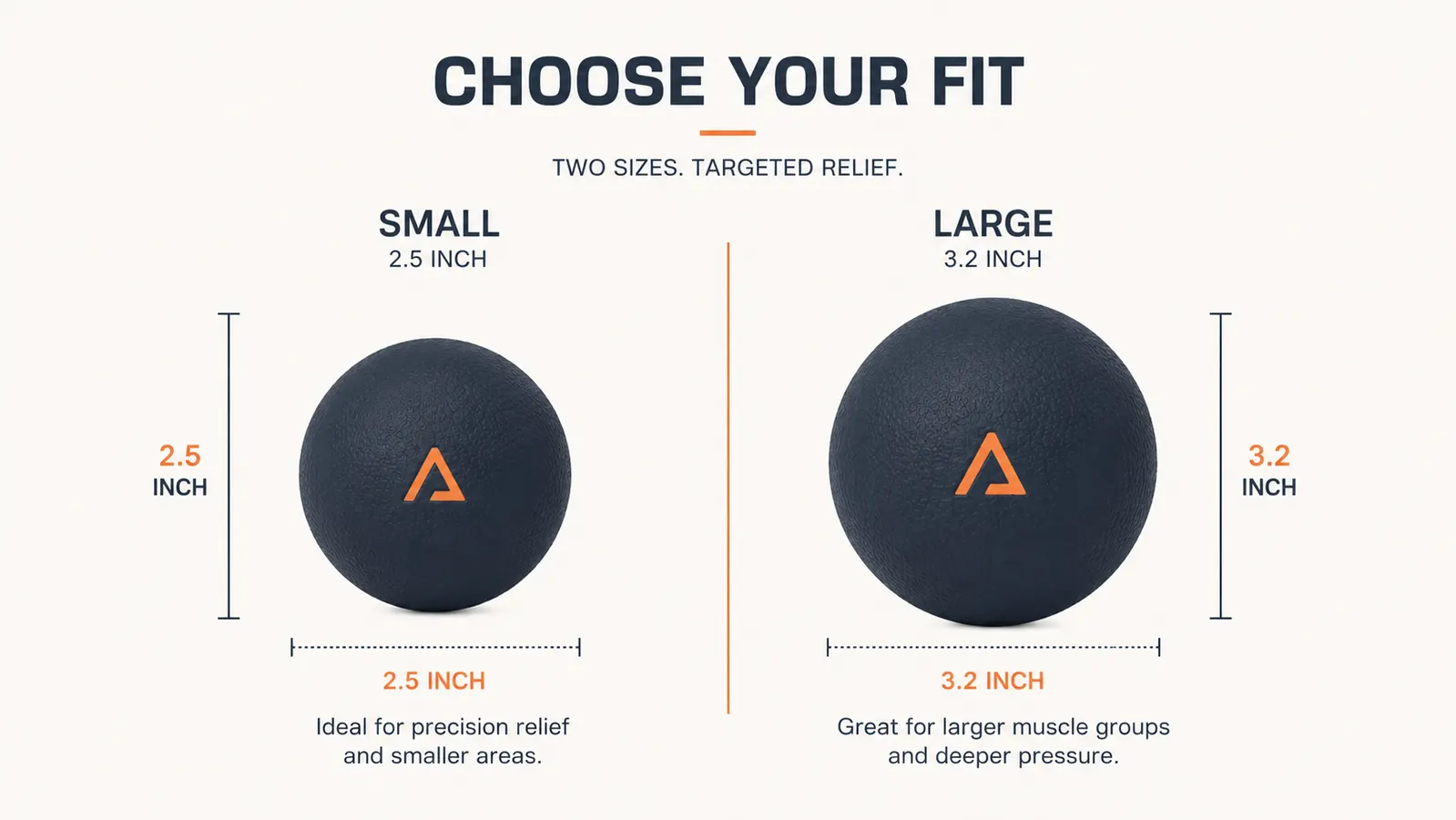
The Acupoint set of 2 gives you a smaller 2.5-inch ball for feet and shoulders and a larger 3.2-inch ball for glutes and thoracic work. Rated 4.5 stars from 5,226 reviews.
Amazon Check Today's Price on Amazon →How I've Used It
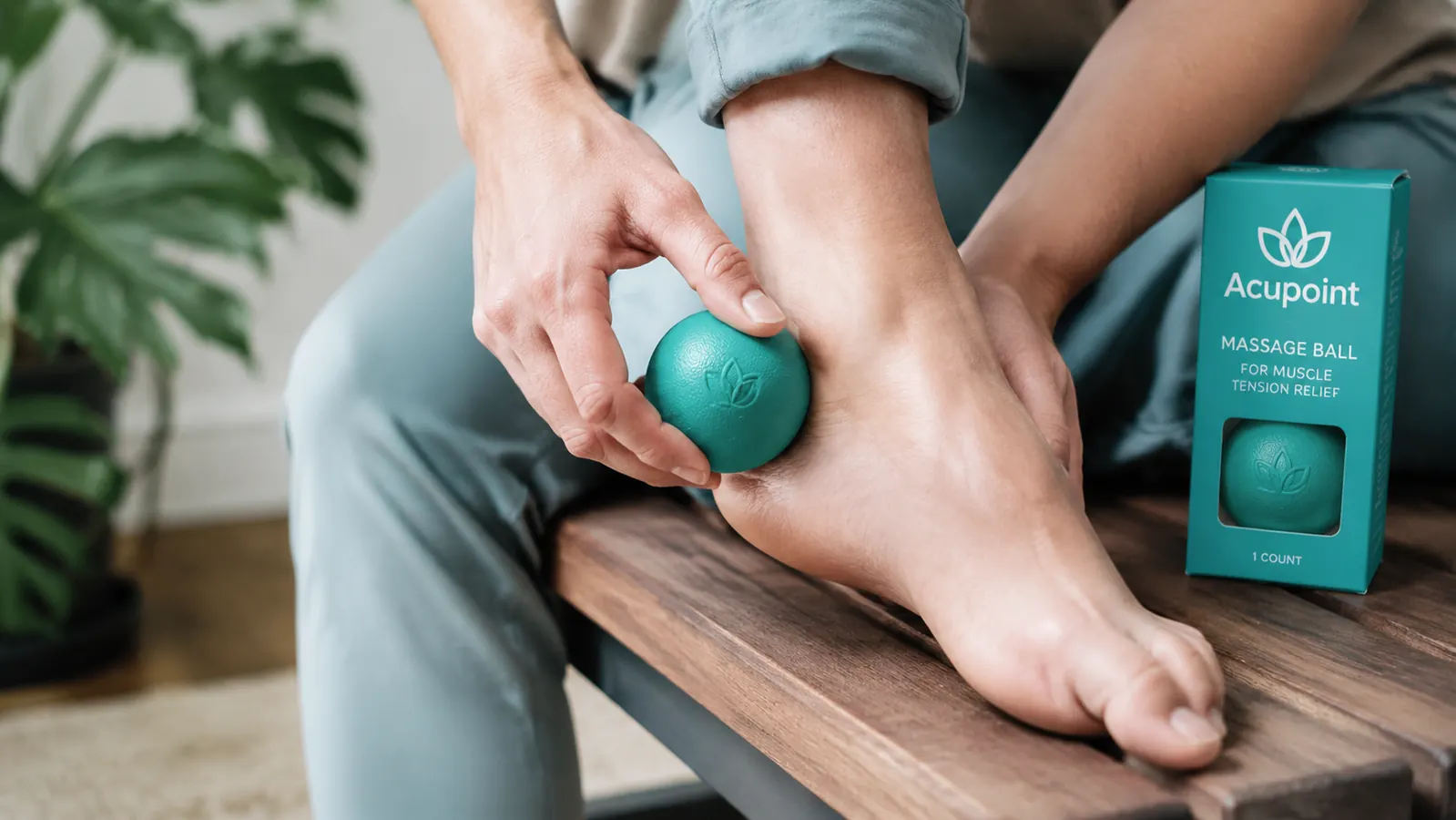
My daily routine has two windows. Morning: five minutes of plantar fascia rolling under each foot before I put my shoes on, using the smaller of the two balls. That one is roughly 2.5 inches in diameter and dense enough to generate real pressure against the arch without rolling off erratically. Evening post-training: the larger ball (around 3.2 inches) goes under my glutes while I sit on the floor, targeting the piriformis and the outside of the hip. When I have overhead press days I also use the smaller ball on my pecs by leaning into a doorframe.
That first month, I was skeptical the balls were doing much beyond placebo. By week six, I had a concrete test case: the same deadlift-induced right glute lockup came back. Instead of waiting it out for three days like before, I spent 10 minutes on the larger Acupoint ball the evening after training. The next morning, I was about 80 percent better. The month after that, the lockup largely stopped happening. Whether that's the balls or just better programming, I can't say with certainty, but the timing is hard to ignore.
The morning plantar fascia work has been the clearest win. I started it specifically because my left heel was nagging me after long days on concrete at the job site. Within two weeks the morning stiffness dropped noticeably. I was doing 3-4 slow passes from heel to ball of foot, pausing on any tender spot for 20-30 seconds. The small ball makes that precise hold possible in a way a foam roller simply cannot.
Build Quality and Texture After Four Months
The balls are made from a firm rubber with a slightly tacky surface texture. That texture matters more than you'd think. A standard lacrosse ball is slick enough to skate off a glute or between shoulder blades and hit the floor. The Acupoint surface grips your shirt or skin enough to stay positioned while you settle into the pressure. After four months of daily use, including leaving them in a gym bag in a hot car through a Texas summer, the surface has not deteriorated. No cracking, no flattening, no loss of that grip texture.
Firmness is where I'd give the most relevant data point. They are hard. Not harsh-with-sharp-nubs hard like a spiked therapy ball, but solid enough that full bodyweight pressure on a truly inflamed spot can be uncomfortable. I've had a couple of sessions on my right pec, the day after a heavy bench session, where I had to back off and use only partial bodyweight. That's not a flaw. It's the physics of trigger point work. But if you're brand new to massage balls, start with partial pressure and build from there.
The surface grips your shirt enough to stay positioned while you settle into the pressure. A standard lacrosse ball just skates off.
The Two-Ball System: Does Having Both Sizes Actually Matter?
My honest answer: yes, and more than I expected. I bought the set because it was one listing, not because I had a strong theory about needing two diameters. Now I wouldn't want to be without both. The small ball sits in the arch of a foot or between a pec and a doorframe precisely. The large ball is stable enough under a seated glute that you can actually control the pressure without it rolling away. If I had only the small ball, glute work would be awkward. If I had only the large ball, foot work would be imprecise and the ball would roll off smaller muscle groups.
The one use case where I reach for something else is upper traps and the base of the skull. For that, the peanut-shaped double-ball setup (two balls taped together or bought as a unit) does a better job of straddling the spine and sitting in the correct position. The Acupoint balls are round, not peanut-shaped, so they land either to the left or right of center. That's a normal limitation for any single sphere.
Performance Over Time: What Changed in Four Months
Month one was exploratory. I was learning where to put the balls and how long to hold pressure. I didn't feel dramatic changes, but I also hadn't established a consistent protocol.
Month two is where the plantar fascia improvement was measurable. I train 5 days a week and work a physically demanding job on the other days. Morning heel stiffness had become a constant. It wasn't. Two weeks of 5-minute morning foot rolling and the stiffness became occasional instead of daily. I did nothing else differently.
Months three and four, the glute work became more systematic. I started using the large ball in a seated position on the floor, one side at a time, leaning into the ball and externally rotating the hip to target the piriformis specifically. The chronic right hip tightness that was showing up in my squat depth started loosening up. I went from feeling a catch at the bottom of my squat around the 6-week mark to being clean through full range by month three.
If you want to build a structured protocol around tools like this, I've written out a body-by-body-part walkthrough in my guide on how to release trigger points with massage balls that covers the exact positions and timing I settled into.
Where It Comes Up Short
Lower back is a no-go with any firm massage ball unless you genuinely know what you're doing. I avoided it entirely. The spinal erectors sit close to bone and nerve structures where unsupervised deep compression isn't something I'm comfortable recommending or doing. If that's your primary pain area, get professional input first.
Deep glute access while standing is also limited. When I want maximum pressure on the piriformis, I need to be seated or lying down with the ball on the floor. Standing and leaning against a wall with the ball doesn't give enough compression to actually penetrate a tight glute on my build (I'm 6'1", 205 lbs). Smaller-framed people may have better luck with the wall approach. At my size, floor work is required.
The balls also don't do anything a percussion massage gun does. They are static pressure tools, not vibration tools. The gun covers more area faster. The ball gets to one specific spot with far more precision. They are not competing with each other in my recovery kit. They solve different problems.
What I Liked
- Two sizes included, each genuinely useful for different body parts
- Grippy surface texture stays put during use, unlike a smooth lacrosse ball
- Extremely durable after 4 months of daily use including heat exposure
- Plantar fascia and shoulder pec work are genuinely excellent use cases
- Small size makes them packable for travel or gym bag
Where It Falls Short
- Very firm, can be uncomfortable on acutely inflamed spots for beginners
- No peanut configuration for spinal work along the vertebrae
- Limited for standing wall work at larger body sizes, floor work needed for real pressure
- Does not replace a massage gun for broad-area muscle flushing

Alternatives I Considered
Before landing on the Acupoint set I looked at three alternatives. A standard lacrosse ball from a sporting goods store runs about the same price but gives you only one size, no grip texture, and no brand support if it cracks. The TriggerPoint MB1 massage ball is a well-regarded single-size option but costs nearly $15 for one ball versus two from Acupoint at $13.50. And the Theracane hook tool takes a completely different approach, using leverage to reach spots like the upper traps that balls can't easily access, but it requires two hands and active effort rather than passive pressure while sitting. I still own the Theracane and use it for different targets.
Who This Is For
This set is well matched for anyone who lifts 3 or more times a week and has recurring tightness in predictable spots. If you've got a glute knot that never fully clears, plantar fascia that's stiff every morning, or pec tension from bench pressing, you'll get real mileage out of these. The price makes buying one set for home and one for the gym a non-decision. I've also handed this set to a coworker who spends his day on concrete floors and he noticed the foot rolling results within a week.
Who Should Skip It
If you're dealing with acute injury, nerve pain, or anything that gets worse when pressed, this is not a substitute for assessment by someone qualified to give it. Trigger point work on already-irritated tissue can make things worse. This is a maintenance and tightness-management tool for people who are basically healthy but beat up from consistent training. It's also not the right primary tool if your main issue is broad muscle soreness versus a specific knotted spot. For general DOMS, foam rolling covers more area faster.
Four months in, I still reach for this set every single morning. At this price, the only question is why you'd wait.
The Acupoint Massage Therapy Ball Set of 2 is rated 4.5 stars across 5,226 reviews. It includes both sizes needed for a complete trigger point routine, from plantar fascia to glutes to shoulders.
Amazon Check Today's Price on Amazon →