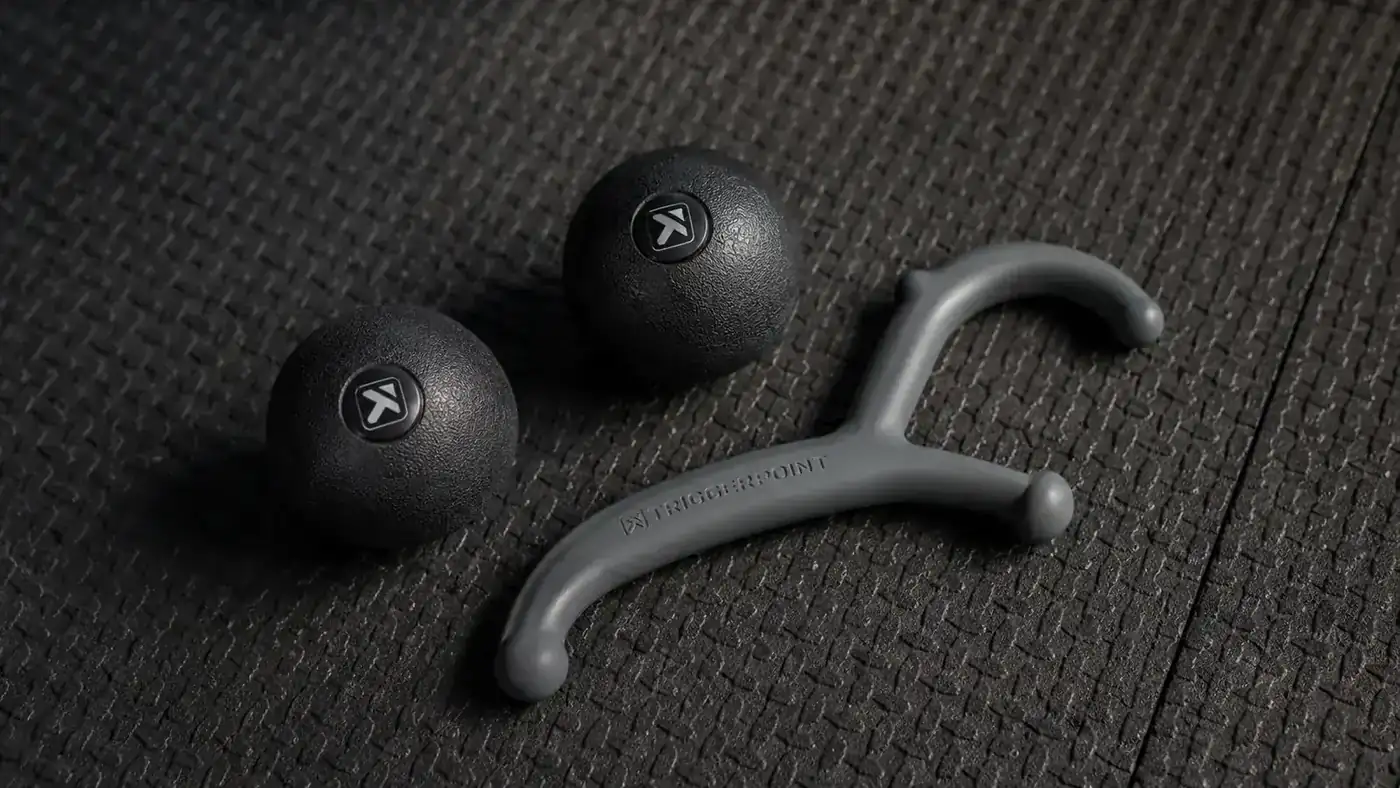
If you have spent any time chasing down a stubborn knot in your upper trap or a tight spot between your shoulder blades, you have probably looked at both options: a massage ball you press into the wall or floor, or a rigid hook tool like the Theracane that you can reach back spots with without a partner. Both can work. But they are not the same tool solving the same problem, and picking the wrong one means you spend 10 minutes fighting your equipment instead of actually releasing tissue.
I have used both. The Acupoint Massage Therapy Ball Set has been in my gym bag for the better part of four months. The Theracane I borrowed from a training partner and used consistently for six weeks. Here is what I found.
| Acupoint Massage Balls | Theracane | |
|---|---|---|
| Price | Affordable as a set of 2 | Mid-range, single unit |
| Portability | Fits in a shorts pocket or gym bag side pouch | 11 inches long, rigid plastic, awkward to pack |
| Reach (upper back / between shoulder blades) | Needs a wall or floor assist | Direct access with the hook; no wall needed |
| Pressure control | Body weight sets pressure; easy to modulate | Arm strength sets pressure; harder to hold steady for 60+ seconds |
| Versatility (body parts covered) | Feet, glutes, lats, traps, calves, pecs -- any flat or curved surface works | Upper back and neck knots are the primary use case; limited for feet and glutes |
| Learning curve | Near zero; position and lean | Moderate; angle and hook placement take practice |
| Durability | Solid rubber construction, no moving parts, does not degrade with use | Hard plastic, durable, but a drop on a hard floor can crack a knob |
| Two-size set | Yes -- large ball for glutes and lats, small ball for feet and pecs | No -- one tool, multiple hook knobs of similar size |
| Best single use case | Full-body myofascial work before or after training | Reaching between shoulder blades without a wall |
Where the Acupoint Massage Balls Win
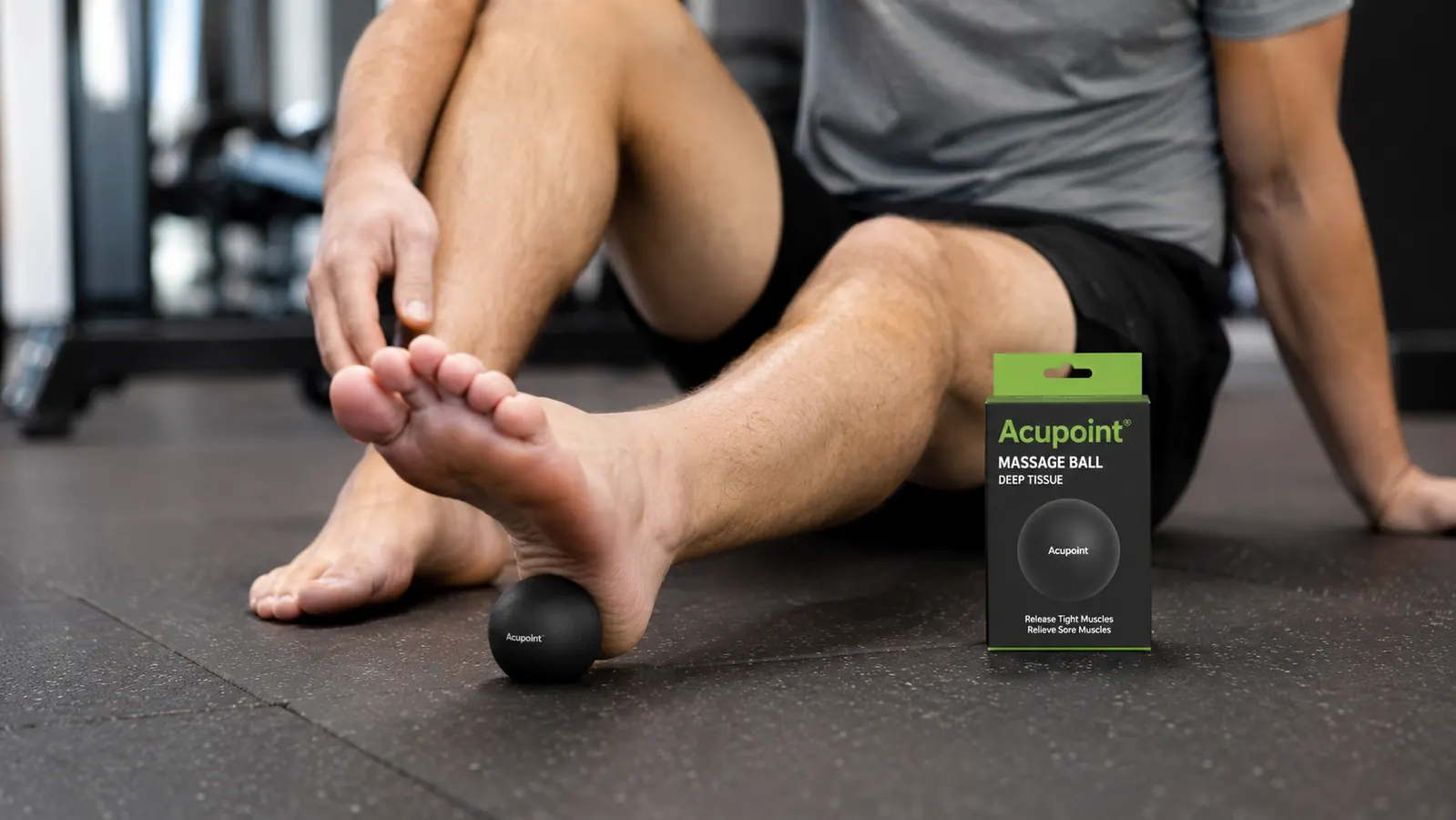
The Acupoint set covers more ground than any single rigid tool. That is not an opinion; it is just anatomy. When you are working your plantar fascia, you need a ball small enough to get into the arch without rolling off. When you are working your glute medius, you need something with enough diameter to sit stable against the floor without sinking in. The two-ball setup handles both. One ball is roughly lacrosse-ball size, the other is smaller and firmer. I use the small one under my foot every morning and the large one against the wall for my mid-trap after heavy deadlift days.
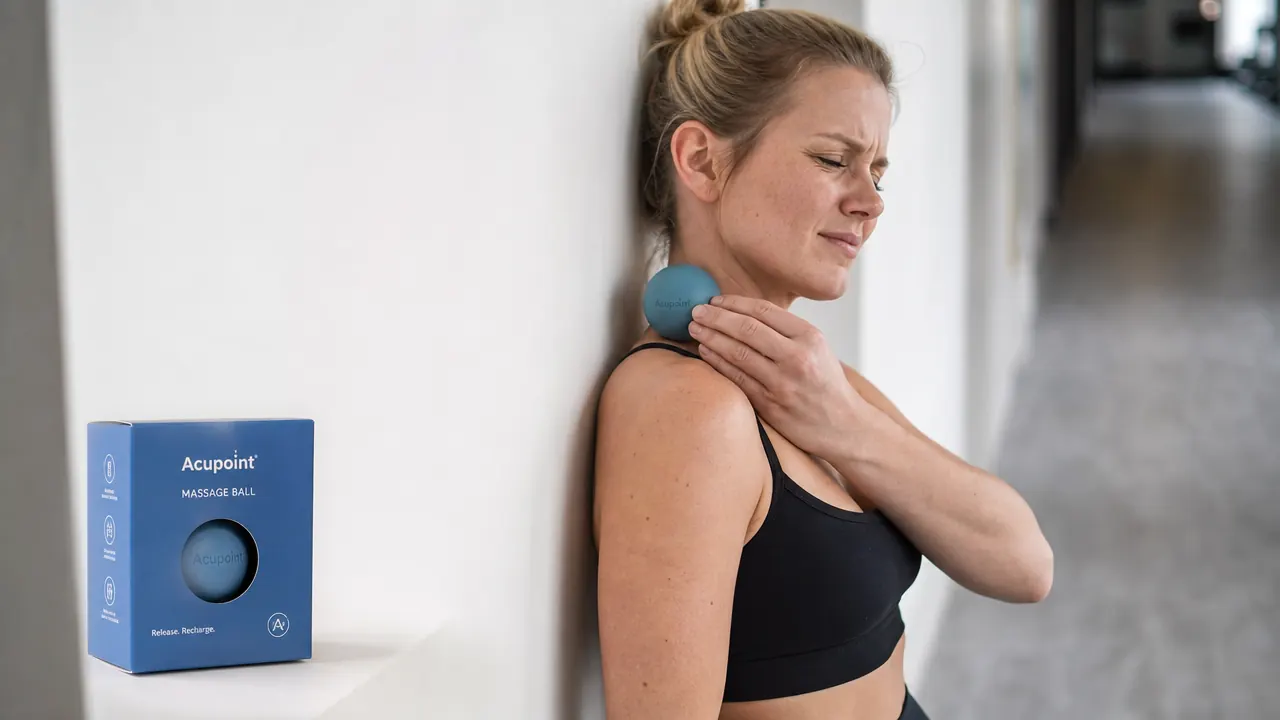
Pressure control is the other clear win. When you lean into a ball against a wall, your legs and core are naturally doing the work of limiting how deep you sink. That means you can ease into a tender spot rather than stabbing it with a rigid hook. With the Theracane, the limiting factor is your arm strength and angle, which fatigues faster and makes it harder to sustain consistent pressure on a single spot for the 30 to 90 seconds it actually takes to get a trigger point to release.
Portability is not a close competition. The Acupoint balls slide into any bag compartment. I have carried them in my jacket pocket. The Theracane is 11 inches of rigid plastic that needs its own compartment. If you travel for work or train at multiple locations, that matters. For more on how to put the balls to work across your whole body, the breakdown of why massage balls beat static stretching covers the movement science behind sustained compression.
Where the Theracane Wins
The Theracane has exactly one situation where it beats the Acupoint balls: the middle of your upper back, between the shoulder blades, with no wall available. If you are on a road trip, in a hotel room with no space to wall-press, or just want to work a rhomboid knot while sitting upright in a chair, the hook reaches a spot the balls simply cannot get to without external support. That is a real advantage, and I will not understate it. People with chronic upper-back tightness from desk work or overhead pressing do use the Theracane for exactly this reason.
The multiple knobs on the Theracane also let you park on a specific point for sustained compression without repositioning. But in practice, I found the arm fatigue from holding the tool in position kicks in before the tissue actually releases. After about 45 seconds my shoulder starts compensating. A tennis ball or the Acupoint ball pressed between my back and a wall holds steady until I choose to move.
The Theracane wins in one specific spot: between your shoulder blades with no wall in reach. Outside of that scenario, the Acupoint balls cover more ground, cost less, and are easier to use without fatiguing your arms.
If you are doing full-body myofascial work, this is the tool that actually travels with you
The Acupoint set handles plantar fascia, glutes, traps, pecs, and calves at a fraction of the Theracane's price. Two sizes. No wall required for most spots.
Amazon Check Today's Price on Amazon →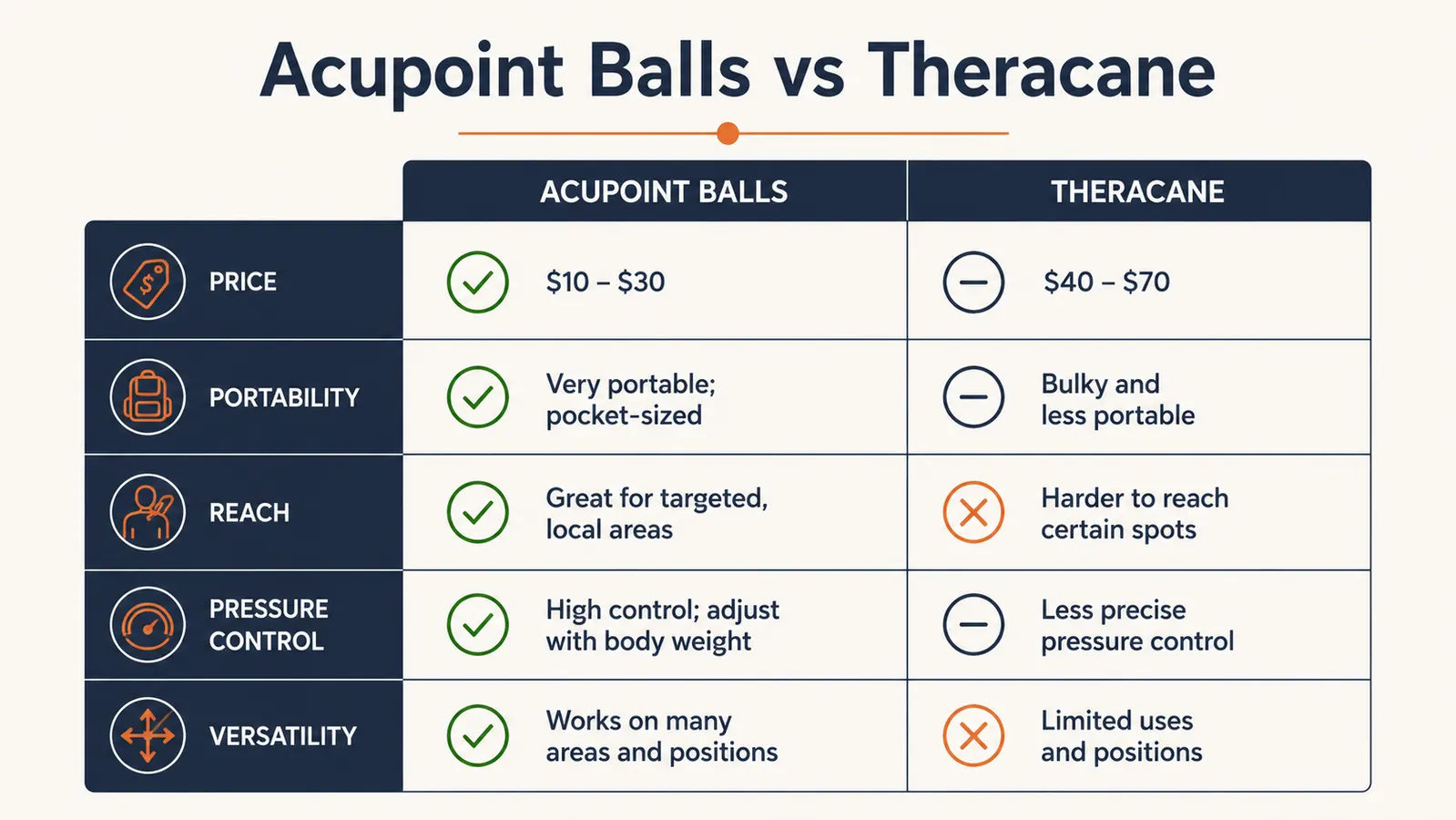
The Technical Difference: Compression Style
The Theracane uses what you might call a pin-and-lever approach. You hook the knob onto a spot and pull the ends of the tool to drive the knob deeper. The balls use gravitational loading. You position them and let your body weight do the work. For most people, gravitational loading is actually more precise. Your nervous system modulates muscle tension in response to sustained compression, and that process takes time. The Theracane makes it harder to sustain that compression without your arm muscles tiring out. The wall-press with a ball is passive enough that you can hang there for a full 60 to 90 seconds per spot, which is what the research on myofascial release generally supports.
There is also the matter of the tool's density relative to the target tissue. The Acupoint balls are rubber with consistent firmness throughout. The Theracane's knobs are hard plastic. On a heavily guarded or sensitive trigger point, that hardness can cause the surrounding muscles to contract defensively, which is the opposite of what you want. The rubber balls tend to elicit less of a guarding response, especially for people newer to trigger point work or dealing with an acutely sore area.
Price and Value Over Time
The Acupoint set is budget-priced. The Theracane typically runs three times that. Both are durable tools that will last for years if you do not abuse them. The Theracane's hard plastic can crack if you drop it on concrete. The rubber balls are effectively indestructible under normal use. At a lower price for two balls covering more body parts, the Acupoint set simply delivers more recovery surface per dollar. If you are building a minimal travel recovery kit and can only bring one item, the balls win that category by default.
Who Should Buy Which
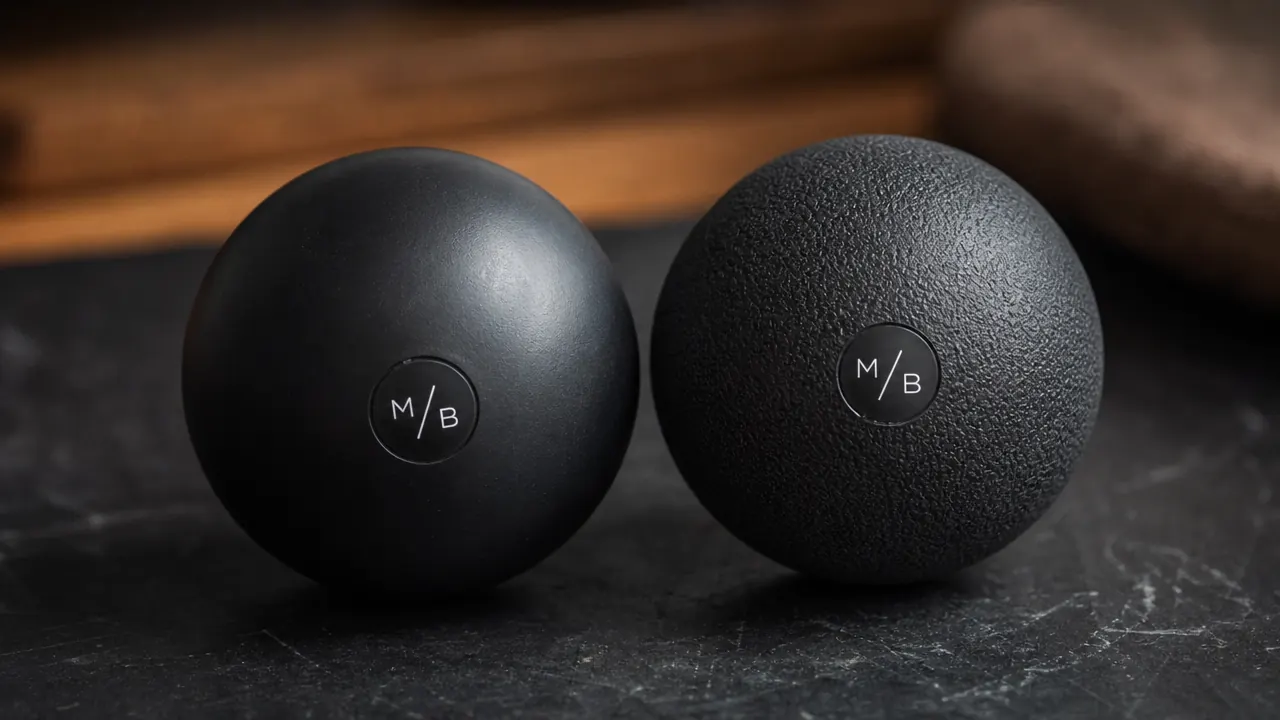
Buy the Acupoint Massage Ball set if: you train more than twice a week, you want a tool that covers feet, glutes, calves, traps, lats, and pecs, you travel or train at multiple locations, and you do not want to spend much on something with a narrow use case. That describes most people reading this.
Consider the Theracane if: you work a desk job that gives you chronic knots specifically between your shoulder blades, you live alone and have no training partner to help you reach your upper back, and you are already using a ball set for everything else. In that narrow case, the Theracane fills a gap. But it is a supplement to a ball setup, not a replacement for one.
If I were starting from scratch with a limited recovery budget, the Acupoint balls would be the first purchase. They get used every single day across multiple muscle groups. The Theracane would be a secondary tool for one specific scenario. That hierarchy reflects the reality of how most people's bodies actually feel after training.
Start with the tool you will actually use daily, not the one with the biggest learning curve
The Acupoint Massage Therapy Ball Set covers more muscle groups, packs in a gym bag, and is budget-friendly. For most lifters, it is the only trigger point tool they need.
Amazon Check Today's Price on Amazon →