
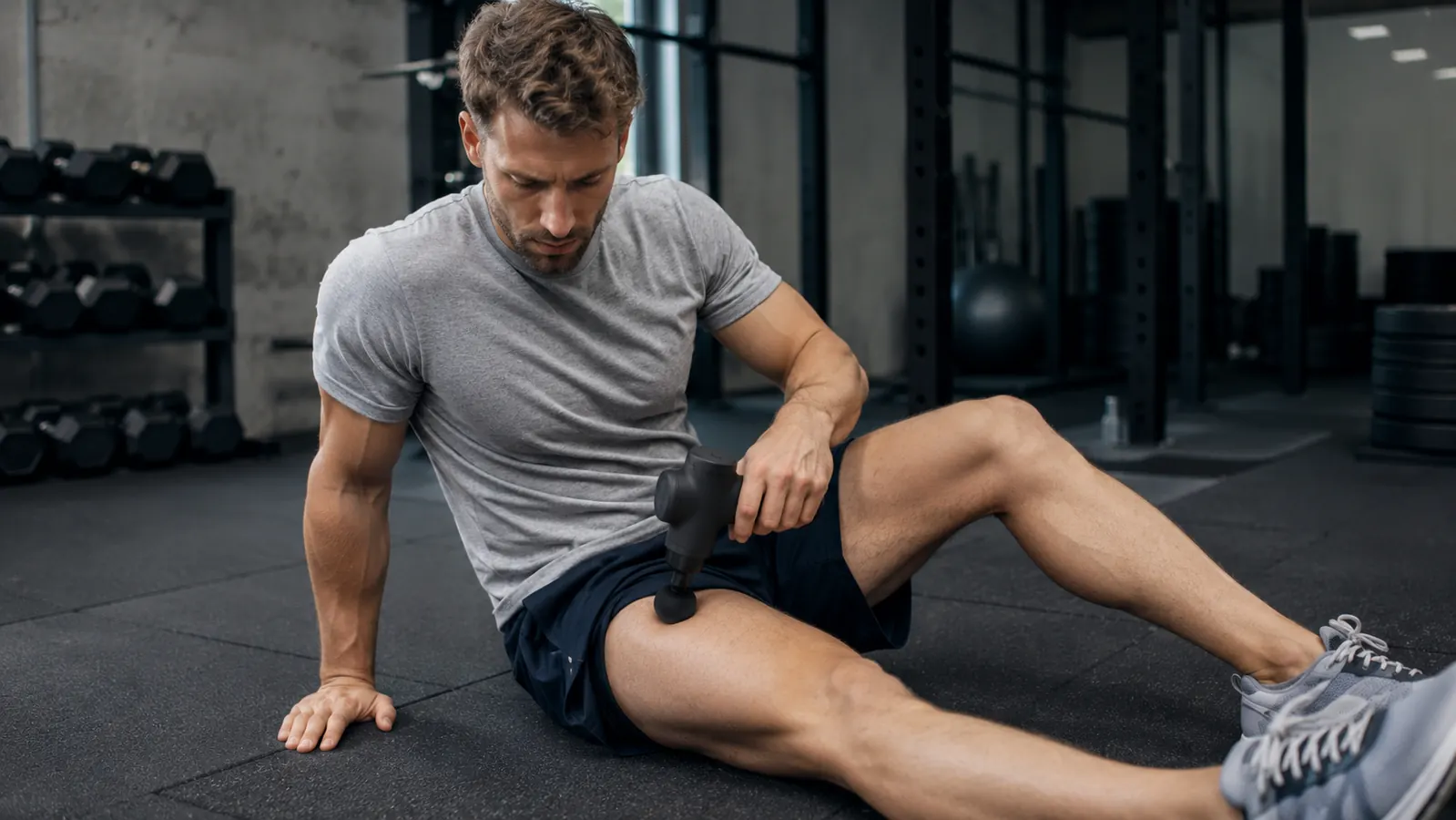
I do not buy fitness tools based on YouTube recommendations. My rule is simple: I wait until something has been on the market long enough to have real-world failure stories, read the one-star reviews first, then make a call. That is how I ended up buying the BOB AND BRAD C2 massage gun in early spring. By late summer, I had used it after nearly every training session, six days a week, and I had a pretty clear picture of what it is and what it is not.
I train five to six days a week, a mix of barbell work and conditioning. I am 41 years old, 187 pounds, and my lower back, glutes, and hamstrings are the spots that talk to me loudest the morning after a heavy squat or deadlift day. Before the C2, my recovery routine was a basic foam roller and whatever stretching I had time for. I was looking for something that would actually move the needle on next-day soreness without adding 30 minutes to my cooldown. The BOB AND BRAD C2 is available on Amazon, and it is FSA and HSA eligible, which factored into my purchase decision. Here is everything I found over four months of daily use.
The Quick Verdict
A well-built percussion gun that outperforms its price class on battery life and attachment variety, with one real weakness: stall force drops off noticeably on the lower speed settings.
Amazon Check Today's Price →Your legs are still sore from two days ago. Here is what I use every night to fix that.
The BOB AND BRAD C2 is the percussion massager I have used daily for four months. It ships fast on Amazon and qualifies for FSA and HSA spending.
Amazon Check Today's Price on Amazon →How I've Used It
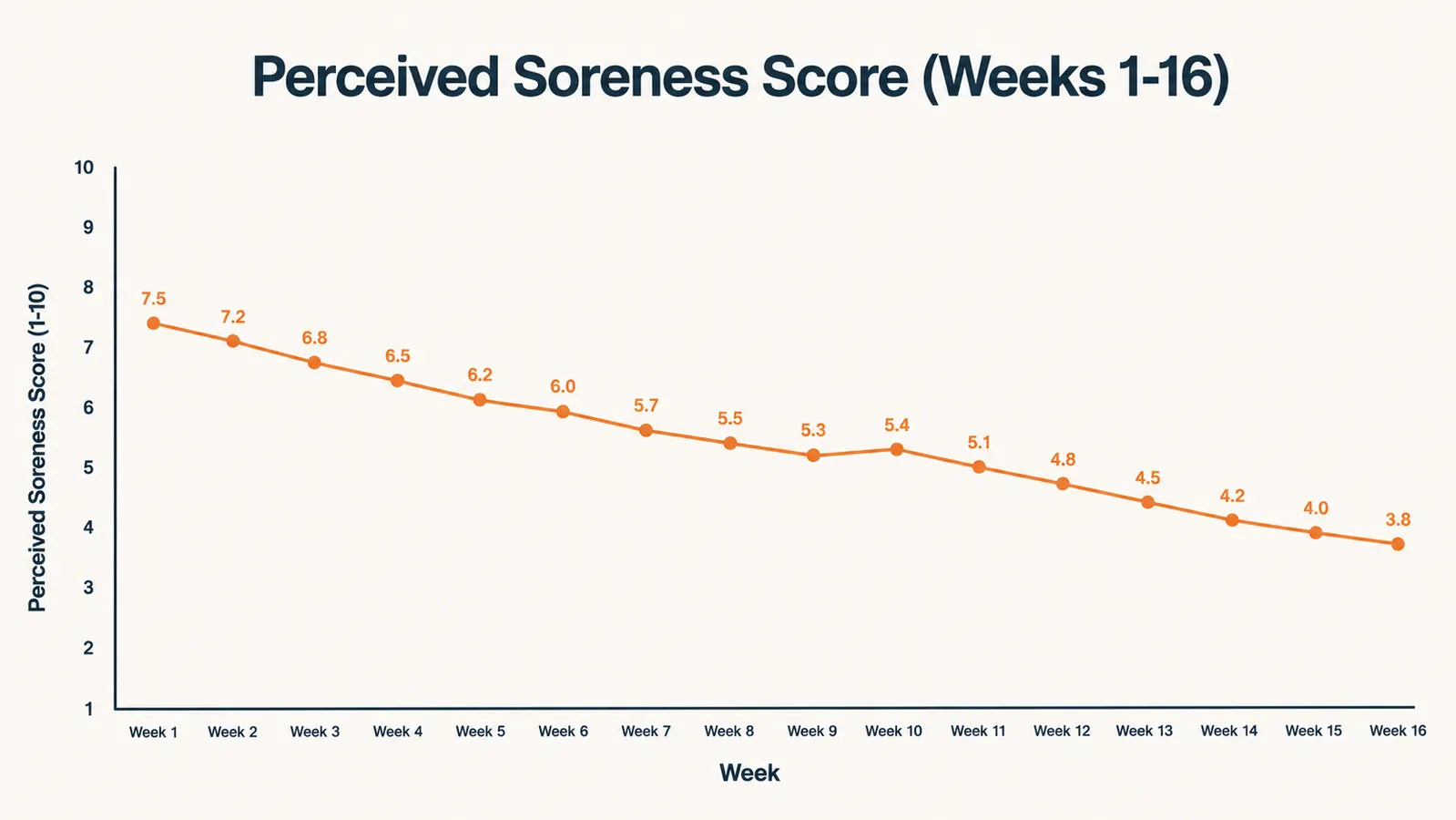
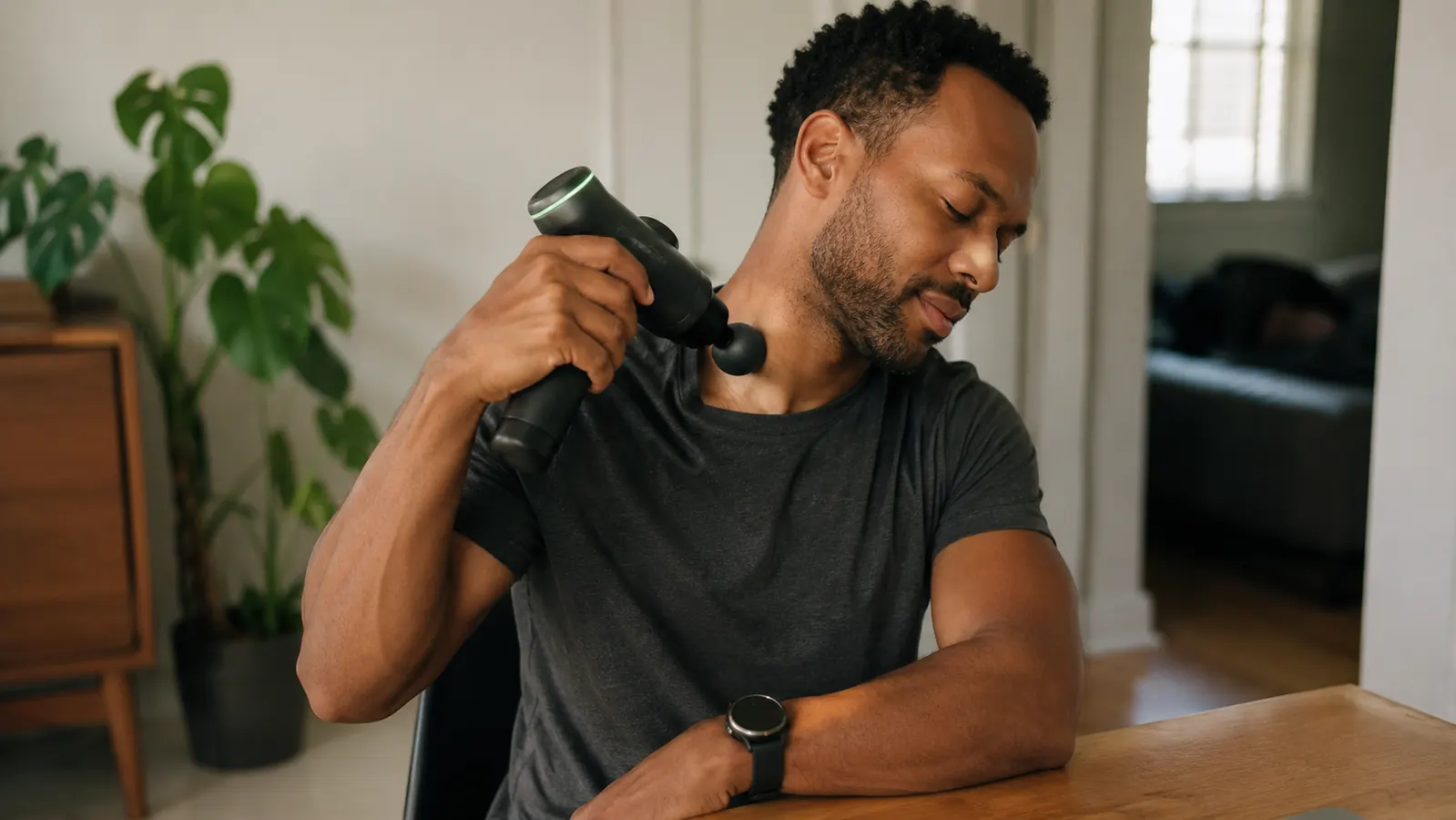
My protocol for the first six weeks was simple: five minutes per muscle group immediately after training, working quads, hamstrings, glutes, and upper traps. I used the ball attachment on large muscle groups and the bullet attachment for the glute-piriformis area and around my shoulder blades. Speed three out of five for big muscles, speed two for anything near a joint. I kept a basic log of perceived soreness the next morning on a 1-10 scale.
Around week four, I started experimenting with pre-workout use as well, three minutes per leg before squatting. The warmup benefit was noticeable in the hip flexors specifically. By month two, I had settled into a consistent pattern: two to three minutes per target area post-workout, occasionally a quick pass before training on a tight day. The gun ran six days a week with one or two full charges in that entire period, which told me the battery spec was not marketing.
Over the full four months, I used the C2 on my quads, hamstrings, calves, glutes, upper and mid back, and forearms. I kept the bullet attachment away from my lower spine and avoided using any setting above two near joints. That kind of discipline is on the user, not the device, but it is worth stating.
What the Spec Sheet Says vs What I Experienced
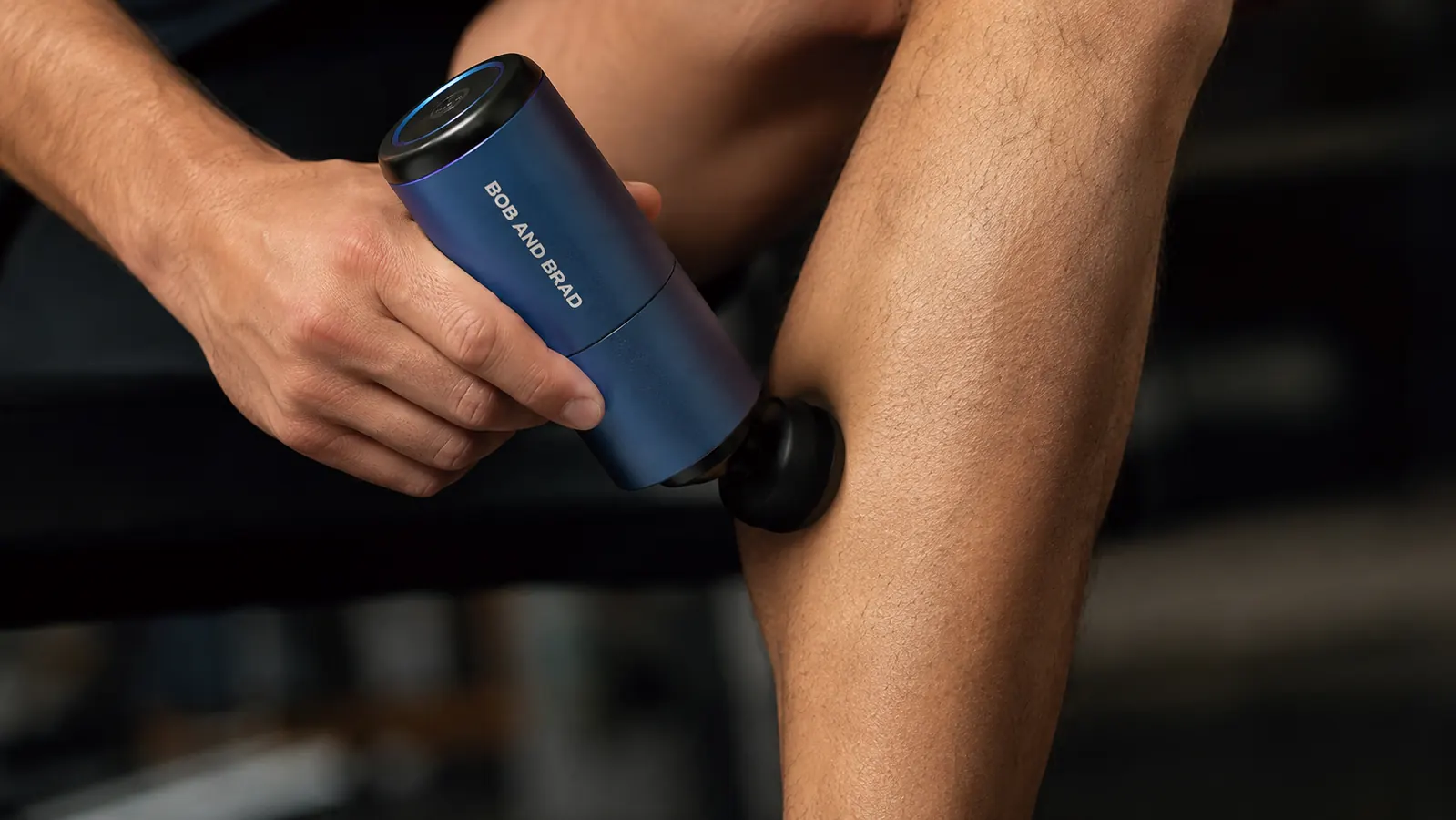
BOB AND BRAD rates the C2 at 3200 RPM on its highest setting and claims a 6-hour battery life. The RPM figure tracks with what I felt. Speed five is genuinely aggressive, more than enough for post-workout glute work without bearing down. The 6-hour battery claim held up well in practice. I charged the gun twice in the first month and twice in the second, so I was getting somewhere between 90 minutes and three hours of actual use per charge, which matches the company's "up to 6 hours on lower settings" language once you factor in that I ran it on three to four most sessions.
The noise level is listed as under 45 decibels. That passes the basic test: I can run it at 10pm without waking anyone up. It is not silent, but it is closer to a box fan than a power drill. The gun weighs 2.2 pounds, which I did not notice as an issue during short sessions but starts to matter if you are trying to hold it against your upper back with one hand for more than 90 seconds.
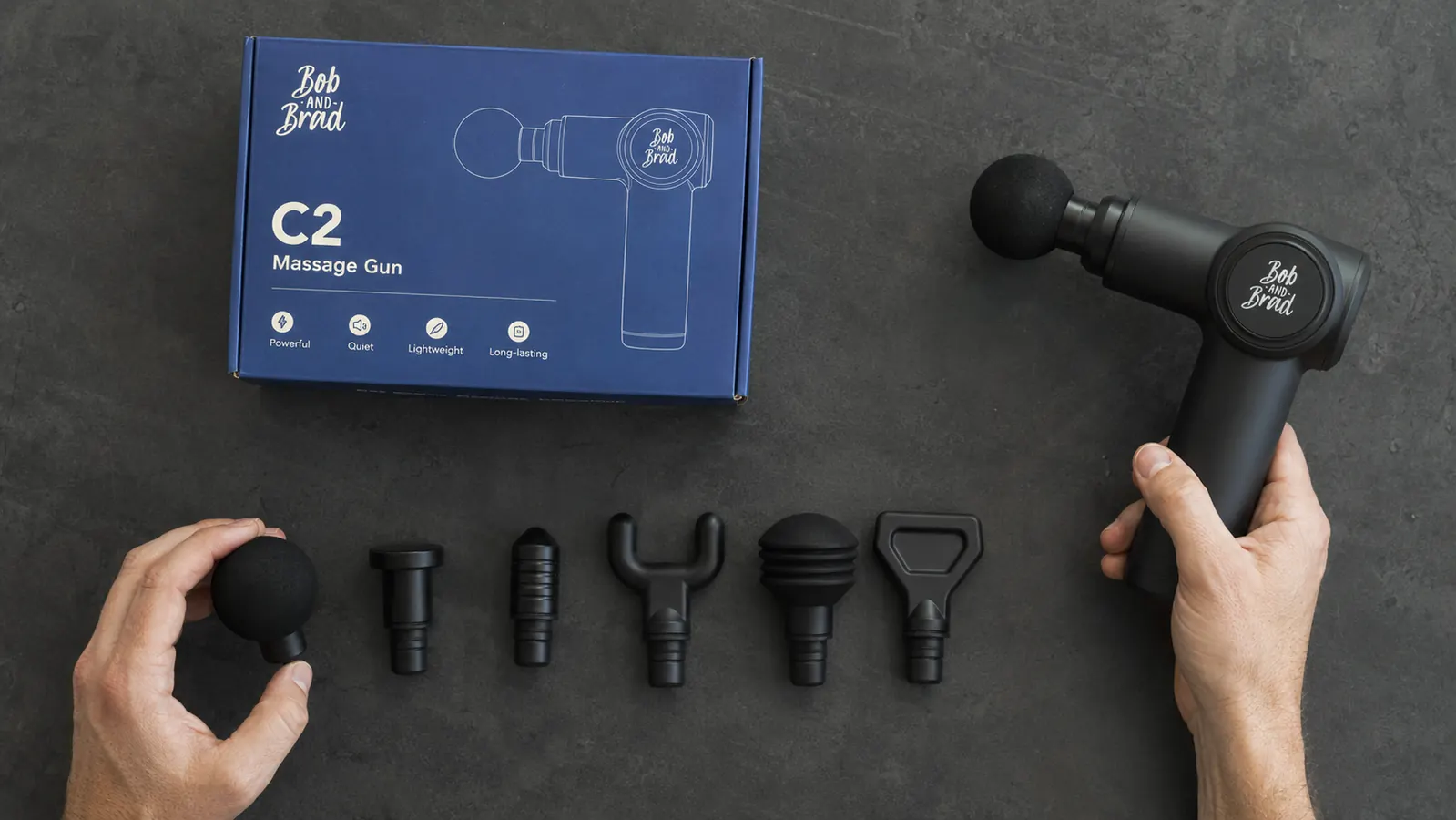
The six attachments cover the common use cases. Ball for big muscle bellies, flat for broad coverage, bullet for targeted deep work, fork for either side of the spine, cushion for bony areas and sensitive spots, and wedge for scraping motions on the IT band. I use the ball and bullet 90 percent of the time, but the fork became a weekly staple on my thoracic spine.
Performance Over Four Months: What Actually Changed
In the first three weeks, the most noticeable effect was in how my quads felt the morning after heavy leg day. I had been averaging a 6-7 on my informal soreness scale for quad DOMS after squatting. By week five, after consistent use, that had dropped to a consistent 4-5. That is not a miracle number, but it means I walked down stairs normally the next day instead of sideways.
The bigger change was in my upper traps and neck. I carry tension there after heavy pressing and any overhead work. The combination of the ball attachment on three and the fork on two running along the erectors five to six times a week produced a meaningful reduction in the baseline tightness I had accepted as normal. By month three, that chronic upper-back knot I had been managing with occasional lacrosse ball work had mostly resolved. I want to be clear: the massage gun was one variable among several, including sleep and training load, but the timing tracked.
By week five, my quad soreness the morning after heavy squats had dropped from a 6-7 to a consistent 4-5. I walked down stairs normally instead of sideways.
My hamstrings were the area where the gun mattered least, for whatever reason. Heavy Romanian deadlifts still produced two-day DOMS in my hamstrings that the C2 did not significantly blunt. I do not know if that is the muscle structure, my technique with the gun, or just the nature of eccentric hamstring loading. I kept a note of it because I see a lot of massage gun content that implies these tools fix everything, and that has not been my experience.
The Real Weakness: Stall Force on Low Settings
This is the most important honest thing I can tell you about the C2. On speed settings one and two, the motor stalls if you press with any real firmness. You feel the head slow noticeably and the vibration pattern changes. This is not a defect specific to my unit. I have seen the same complaint in the long-tail reviews from verified buyers who have had the gun for several months. It means that for sensitive or tender areas where you want lower speed but still some depth, you are choosing between light pressure at low speed or moderate pressure at higher speed. Neither is wrong, but the stall behavior means you cannot use slow speed with body weight on the gun the way some protocols recommend.
On settings three through five, stall force is not an issue. The motor holds well even pressing into a dense glute or quad. But it is worth knowing before you buy, especially if you are working around a sensitive area where you want the lowest speed possible with consistent contact. If that is your primary use case, you may want to look at guns in the next price tier. For general post-workout percussion at moderate to high speed, the C2 performs well above what its price would suggest.
Alternatives I Considered Before Buying
The two guns I compared seriously before buying the C2 were the Theragun Mini and the Renpho R3 massage gun. The Theragun Mini has a stronger motor reputation and a better stall-force rating, but it costs roughly three times as much for a smaller number of attachments and a shorter battery life on paper. If you want a direct comparison, I have written a full breakdown in the BOB AND BRAD C2 vs Theragun Mini head-to-head. The short answer is that the Theragun earns its premium if you need deep pressure on low settings, but for most post-workout use the C2 closes the gap significantly.
The Renpho R3 came in cheaper and had decent reviews, but I could not get clear information on its actual RPM range or stall force from any independent source. When a spec sheet depends entirely on brand self-reporting without any third-party testing or teardown data, I pass. The C2 at least has enough real-world user history across 13,000-plus reviews on Amazon to give me a reliable read on how it holds up.
What I Liked
- Battery life held up well in daily use over four months, two to three charges per month on regular use
- Six attachments cover every realistic use case including the fork for spinal work
- Noise level is genuinely low enough for late-night use without disturbing others
- Strong performance on settings three through five with no stall issue under normal pressure
- FSA and HSA eligible, which made the purchase easy to justify
- 4.6 stars across more than 13,000 reviews on Amazon gives you a reliable base of real-world data
Where It Falls Short
- Stall force on settings one and two is noticeably weak under any real body-weight pressure
- 2.2 pounds feels manageable for short sessions but tiring for solo upper-back work held with one arm
- Head amplitude is shorter than premium guns, which limits how deep it gets on very dense muscle tissue
- The carrying case, while included, is flimsy and will not survive a gym bag for long
- Did not produce noticeable results on eccentric hamstring soreness in my testing
Practical Tips for Getting the Most Out of It
The attachment choice matters more than the speed setting in most cases. For large muscle bellies like quads and glutes, the ball attachment on speed three gives you the best coverage without hammering one small spot. For tight periscapular muscles around the shoulder blades, the fork attachment on speed two run slowly along the edges of the spine is one of the more useful things this gun does. For calves after a long run or heavy leg day, the flat head on speed four gives broad coverage without the pinpoint pressure that can cause cramping.
Do not use the bullet attachment near any joint space, the knee, elbow, or wrist area. The percussion at that attachment width concentrates enough force that it is uncomfortable and potentially counterproductive on joint-adjacent tissue. This is a user-technique issue that applies to any percussion gun, not just the C2. If you want a full step-by-step approach to using this tool effectively, my post on how to use a massage gun for sore muscles covers the protocol I settled into after several weeks of experimentation.
Who This Is For
The BOB AND BRAD C2 is a good fit if you train four or more days a week, want a daily-use percussion tool that will not die in six months, and are not willing to spend three times as much on a Theragun. It holds up to real daily use, the battery is not a lie, and the six attachments mean you can address most muscle groups with the right head shape. It also works well if you have an FSA or HSA balance to spend, since it qualifies without needing a letter of medical necessity on most plans.
Who Should Skip It
If your primary use case involves low-speed deep pressure, such as working around a recovering injury site or doing sensitive tissue work at very slow percussion, the stall force issue on settings one and two makes the C2 a poor match. You would be better served by a gun with a higher stall-force rating even at low settings. Similarly, if you are a larger athlete with very dense muscle tissue, you may find the amplitude limiting at high body-weight pressure. The C2 punches above its price class but it does not match a high-end professional unit in raw depth.
Four months of daily use and mine still runs like it did on day one.
The BOB AND BRAD C2 is currently available on Amazon with Prime shipping. It qualifies for FSA and HSA spending, and it comes with all six attachments and a carrying case.
Amazon Check Today's Price on Amazon →