
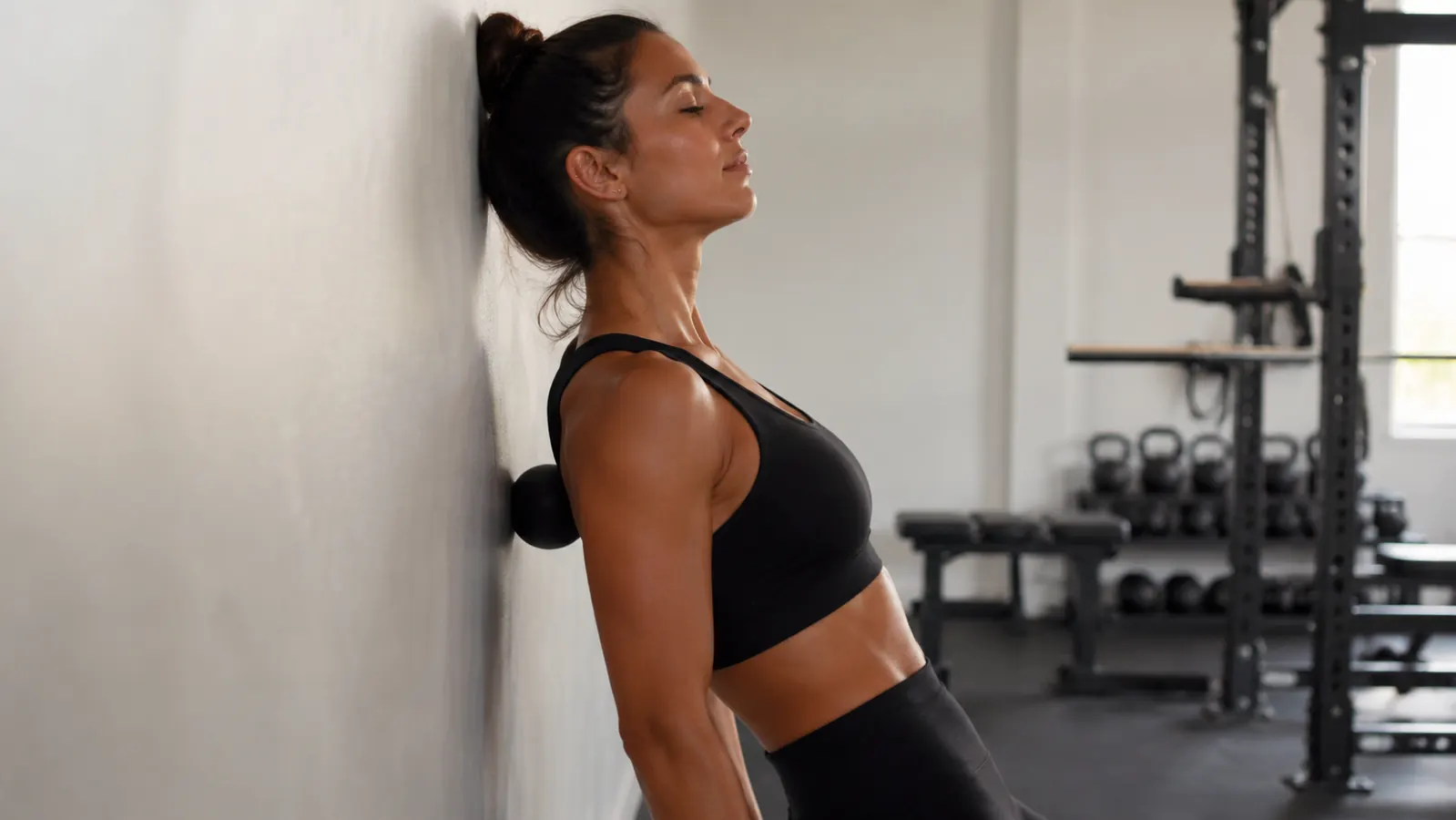
I stretched my left glute for months. Pigeon pose, figure-four stretch, every variation I could find on YouTube. The knot loosened for about ten minutes and then came back. A physical therapist finally told me what I had been doing wrong: static stretching pulls the muscle along its length, but a trigger point knot is a localized cluster of contracted fibers sitting inside that muscle. You cannot lengthen a rope and expect the knot in the middle to disappear. You have to go after the knot directly. That is what a massage ball does. The Acupoint Massage Therapy Ball Set of 2 is what I switched to, and the difference in that glute knot was noticeable inside the first week.
The Acupoint set is rated 4.5 stars across more than 5,000 Amazon reviews, it ships with two ball sizes for different muscle groups, and it costs less than a single sports massage session. If you already know you want it, the link below goes straight to the Amazon listing. If you want to understand why a massage ball works when stretching does not, keep reading.
The knot that two months of stretching did not fix took one week with a massage ball
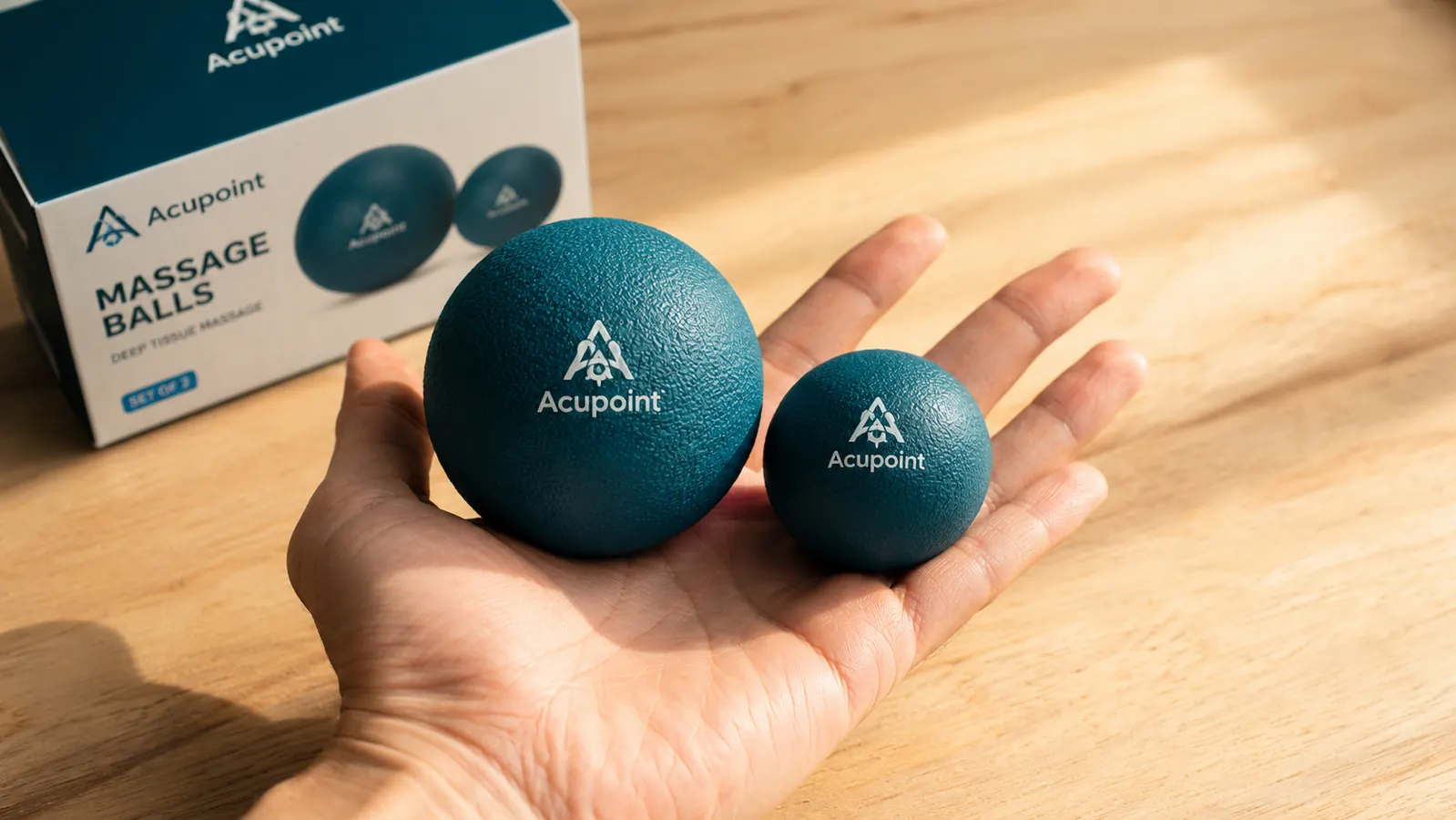
The Acupoint Massage Therapy Ball Set of 2 delivers direct trigger point pressure to glutes, feet, upper back, and shoulders. Rated 4.5 stars across 5,000+ verified buyers.
Amazon Check Today's Price on Amazon →Massage Balls Apply Direct Compression to the Knot Itself
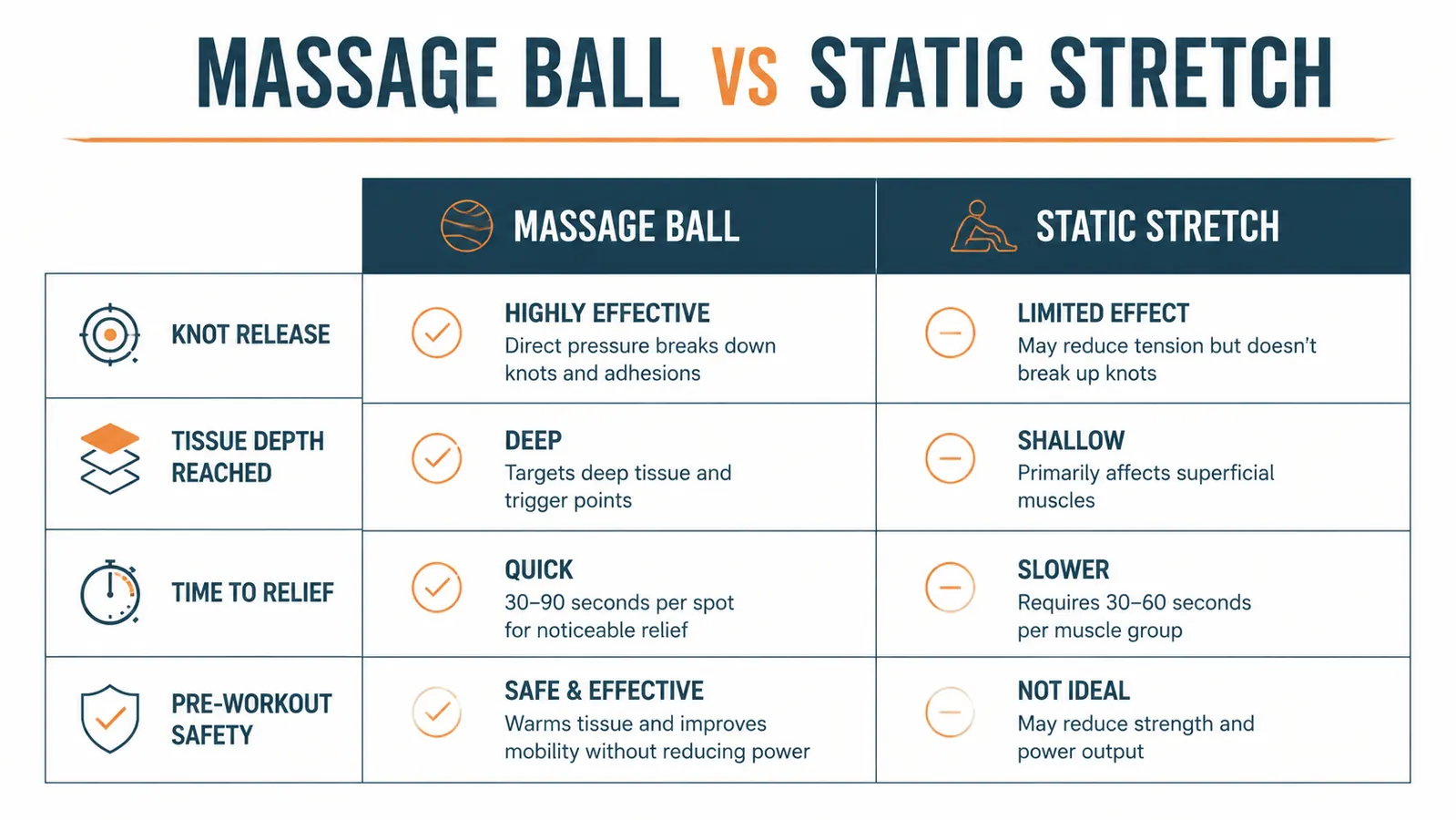
A trigger point is a specific, localized zone of hypercontracted muscle fibers. Static stretching distributes tension across the full length of the muscle and never concentrates enough force on that small area to release it. A massage ball pins the exact spot under your bodyweight and holds sustained pressure there, which is what forces the contracted fibers to let go. With the Acupoint set, you can position the smaller ball precisely on a quarter-inch knot and hold it for 30 to 90 seconds while the tissue gradually releases. Stretching cannot do that. Learn more in the <a href="/acupoint-massage-ball-review-long-term">Acupoint massage ball long-term review</a> where I cover where this ball works best.
They Reach Tissue Depth That Stretching Cannot Access
The glute medius sits underneath the glute max. The pec minor sits underneath the pec major. The piriformis is buried under multiple layers of tissue. Static stretching loads the surface layers and rarely delivers meaningful tension to the deeper structures where chronic knots actually live. A firm massage ball pressed against a hard surface transmits force through the superficial layers and into the deeper muscle belly. The larger ball in the Acupoint set handles this for bigger groups like the glutes and upper back, where depth matters most.
You Can Use Them Before Lifting Without Killing Your Strength
Studies consistently show that static stretching held for 30 seconds or more before a training session reduces power output by a measurable percentage. The effect is temporary, but it is real enough that serious lifters avoid it pre-workout. Rolling on a massage ball before training does not carry the same penalty. It loosens the tissue through compression and movement rather than sustained elongation, so you get reduced tightness and improved range of motion without the temporary strength loss. I use the Acupoint ball on my hip flexors and posterior shoulder for two minutes before every session as a warmup tool.
They Give You Real-Time Feedback on Where the Problem Is
When you stretch, you feel the entire muscle group pulling. When you roll a massage ball slowly across a muscle, you feel the exact spots that are restricted. Sharp tenderness under the ball marks a trigger point. Dull aching marks congested fascia. That feedback loop lets you locate problems you did not even know existed and address them in the same session. I found a knot in my right subscapularis with the smaller Acupoint ball that had been causing shoulder clicking for months. Two weeks of daily work on that spot and the clicking stopped.
Two Ball Sizes Let You Match the Tool to the Muscle
This is a practical point that matters more than it sounds. A tennis-ball-sized sphere is wrong for plantar fascia work because it is too large to get into the arch precisely. A golf-ball-sized sphere is wrong for broad upper back coverage because it creates too much point pressure over too small an area. The Acupoint set solves this by including both sizes. The large ball handles glutes, hamstrings, upper back, and lats. The small ball handles foot arch, calf knots, pec minor, and small rotator cuff muscles. Having both in one set means you are not making compromises with the wrong tool size.
They Work on Plantar Fascia in a Way No Stretch Can Match
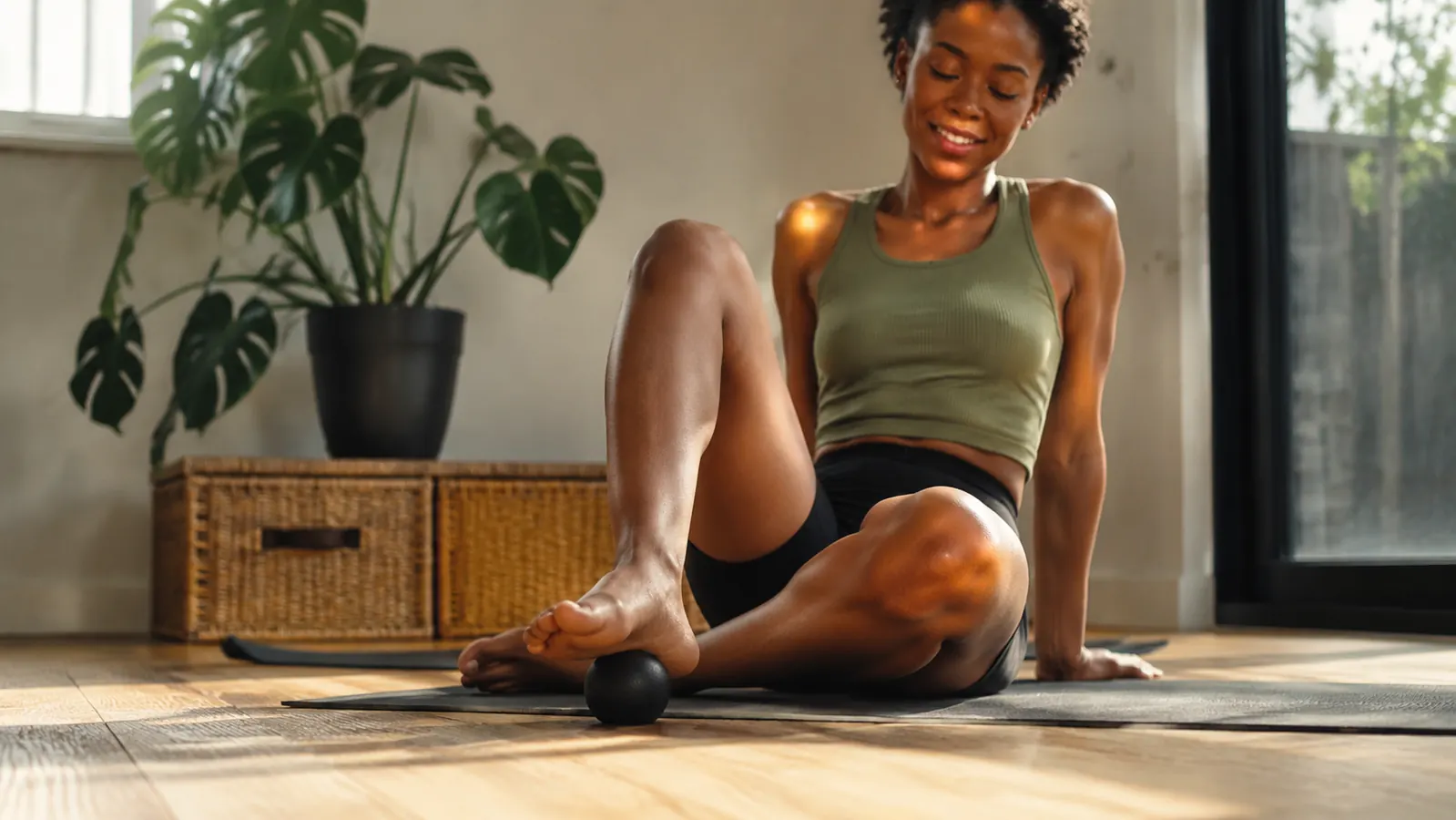
The standard plantar fascia stretch involves pulling your toes back toward your shin while seated. It helps, but it stretches the fascia along its length without breaking up the adhesions that form in the arch after long runs or standing shifts. Rolling the Acupoint small ball under the arch with moderate bodyweight pressure for two minutes per foot every morning is the most effective thing I have done for plantar soreness, and I have tried arch supports, toe stretchers, and ice bottles. The ball hits the actual problem. The full protocol is in the <a href="/how-to-release-trigger-points-with-massage-balls">trigger point release guide</a>.
Sustained Pressure Signals the Nervous System to Stop Guarding
When a muscle is in a knotted, contracted state, part of what is maintaining that contraction is a nervous system signal to protect the area. It is not purely mechanical. Static stretching can actually increase that protective response if it triggers a stretch reflex, which is why aggressive stretching of a tight muscle sometimes makes it feel worse immediately after. Sustained compression from a massage ball held in one spot long enough does the opposite: it gradually convinces the nervous system that the area is not under threat and allows the muscle to downregulate its tension. This is the principle behind ischemic compression, and it is why holding the ball still produces better results than rolling aggressively.
They Are Portable and Cost Basically Nothing Per Use
A sports massage runs somewhere around $80 to $120 per session where I live. The Acupoint set costs $13.50. At one use per day for a year, the cost per session is about four cents. Both balls fit in a gym bag side pocket and weigh almost nothing. I keep one ball at my desk for calf and foot work during long work-from-home days. The accessibility matters because consistent daily use is what actually produces lasting results with trigger point work, and a tool that costs nothing to use and goes with you everywhere has a far higher compliance rate than booking appointments.
They Break Up Scar Tissue Adhesions That Stretching Slides Around
Scar tissue from old muscle strains, repetitive overuse, or years of sitting in compressed positions forms cross-links between muscle fibers that restrict movement and create chronic tightness. Stretching slides the whole muscle past those adhesions without disturbing them. Direct compression from a massage ball disrupts the adhesion at the surface level and, with repeated sessions, can meaningfully reduce the restriction it causes. This is particularly relevant for older athletes and anyone who has had a nagging soft-tissue injury that technically healed but left the area feeling permanently stiff.
The Results Compound Over Weeks in a Way That Static Stretching Does Not
Static stretching produces temporary length changes that fade within hours if you do not maintain the practice. Trigger point work produces cumulative structural changes: adhesions break down, chronic contractures soften, and movement patterns gradually shift. After four months of using the Acupoint balls daily, my hip external rotation is measurably better on both sides. That is not a flexibility gain from stretching. That is tissue quality improving because the underlying restrictions are actually gone rather than temporarily lengthened. The <a href="/how-to-release-trigger-points-with-massage-balls">step-by-step trigger point protocol</a> shows which areas to prioritize and in what order for the fastest compounding effect.
What I Would Skip
A massage ball is not a replacement for a physical therapist if you have an acute injury, a structural issue, or genuine nerve pain. If pressing on a spot sends a sharp shooting pain down a limb, stop immediately and get that looked at. This tool works on muscular tension and soft tissue knots, not on disc problems, bone spurs, or nerve entrapments. I also would not use it directly on a bruise, a fresh strain, or an area with active swelling. Wait until the acute phase has passed. And do not confuse productive discomfort from trigger point pressure, which should feel like a deeply satisfying ache that eases, with sharp structural pain, which means something different is wrong.
You cannot lengthen a rope and expect the knot in the middle to disappear. You have to go after the knot directly.
Four months of daily use on glutes, feet, and upper back. The knots that survived two years of stretching are finally gone.
The Acupoint Massage Therapy Ball Set of 2 delivers direct trigger point compression to exactly where the problem is. Two sizes, one set, 4.5 stars across 5,000+ reviews, and costs less than a single sports massage.
Amazon Check Today's Price on Amazon →