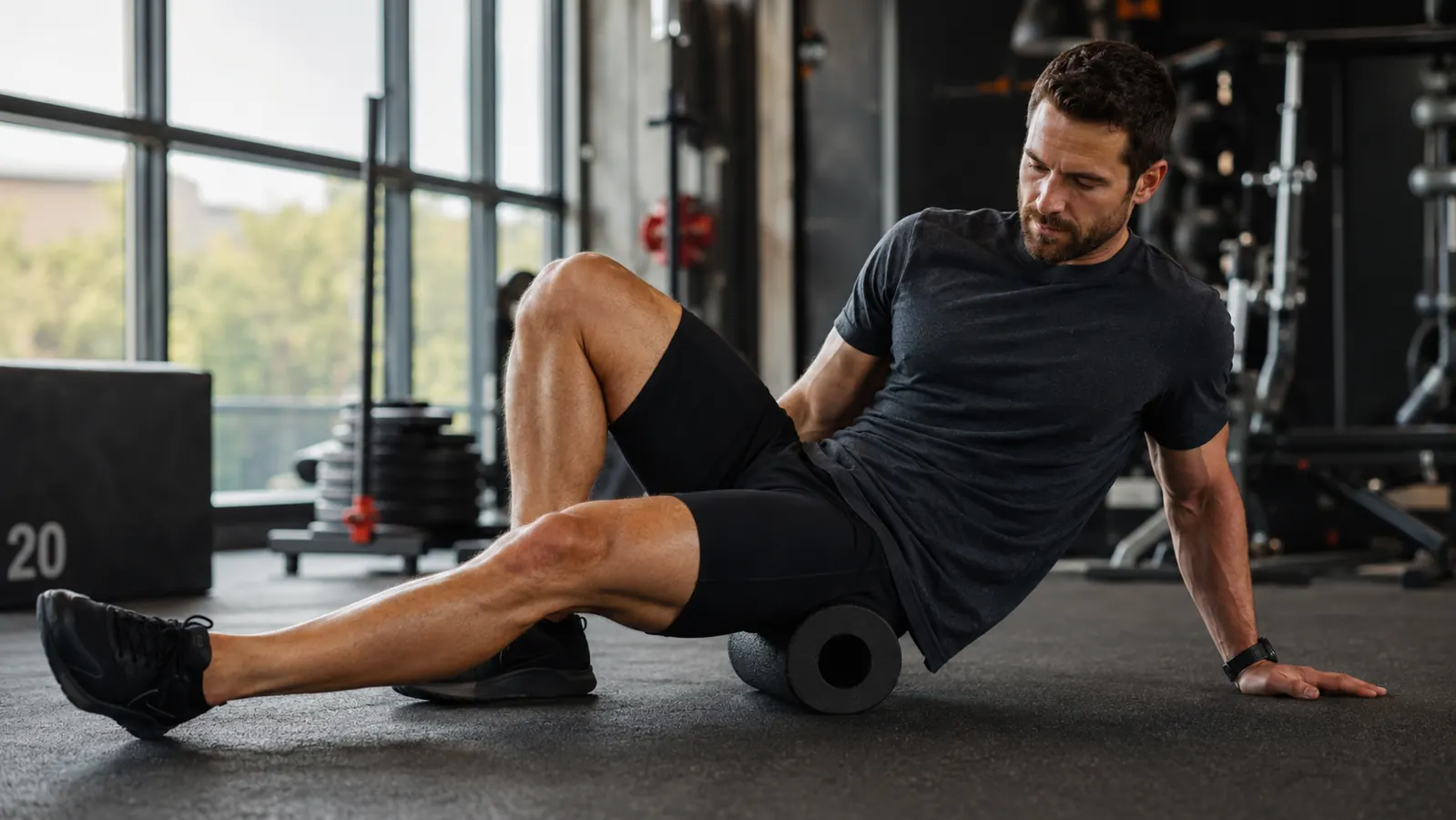
Most people treat foam rolling like a checkbox. They do five seconds on each leg, toss the roller in a corner, and wonder why their legs are still shot two days after squats. I used to do the same thing. It wasn't until I started taking foam rolling seriously, both before and after training, that I noticed a real shift in how fast I bounced back between sessions. The TriggerPoint CORE foam roller is what finally made me consistent with it. The softer compression meant I'd actually roll for the full two minutes instead of bailing because it hurt too much. If you've been skipping foam rolling or doing it halfheartedly, these 10 reasons might change how you think about it.
A quick note before the list: foam rolling is not a substitute for sleep, adequate protein, or proper programming. But as a daily two-to-four minute habit layered on top of those things, it adds up. Here's what you're actually getting from it.
If your muscles stay sore for days after every workout, the roller you're using might be the problem
The TriggerPoint CORE uses a softer compression layer that most people stick with longer than traditional hard foam. Rated 4.6 stars across nearly 8,000 reviews.
Amazon Check Today's Price on Amazon →It Warms Up Fascia Before Your Joints Have To
Rolling before a workout increases temperature and pliability in the connective tissue surrounding your muscles. That matters because fascia that's still stiff from sitting doesn't stretch well, which puts more load on your joints during the first few reps. Two minutes of foam rolling before a lower body session gets the tissue moving before you add load. I do quads, hip flexors, and calves as a pre-lift warm-up routine. If you want a step-by-step protocol for the IT band specifically, this guide on <a href="/how-to-foam-roll-tight-it-band" rel="noopener">how to foam roll a tight IT band</a> breaks it down position by position.
Pre-Rolling Increases Range of Motion Without Killing Strength
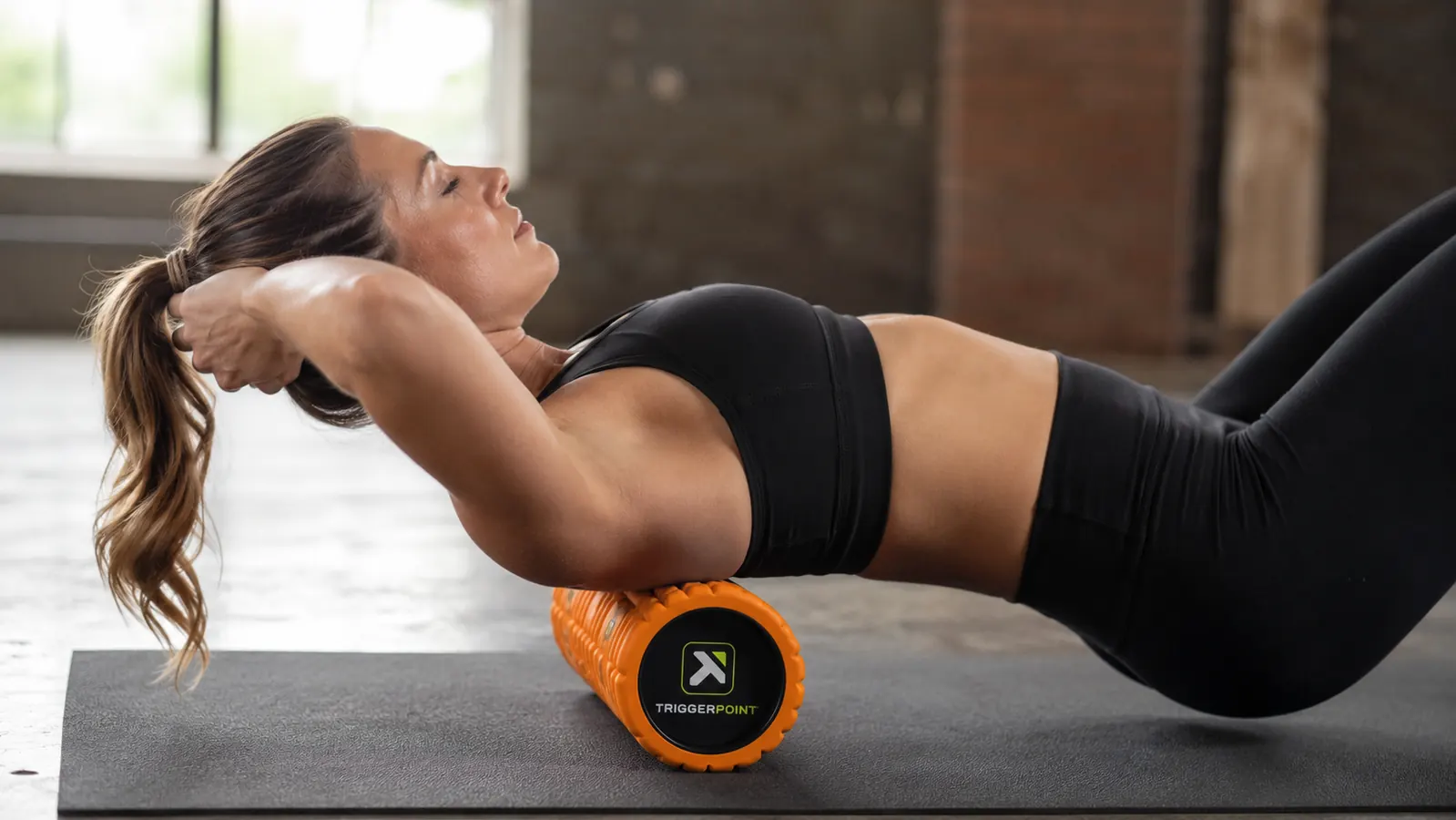
Static stretching before lifting has a well-documented downside: it can temporarily reduce force output. Rolling doesn't carry the same risk. Research on myofascial release suggests foam rolling improves range of motion acutely without the same strength penalty. That's useful for squats, deadlifts, and overhead pressing, where tight hips or lats limit your depth or form before you even pick up a weight.
It Signals the Nervous System to Start Relaxing Tight Spots
When you hold pressure on a tight area, mechanoreceptors in the tissue send a signal to the central nervous system to reduce muscle tension. It's not magic. It's just how the body responds to sustained compression. That's why rolling a specific spot for 30 to 60 seconds works noticeably better than a single fast pass. Slower is more effective, and softer rollers make it easier to actually slow down.
Post-Workout Rolling Clears Metabolic Waste More Efficiently
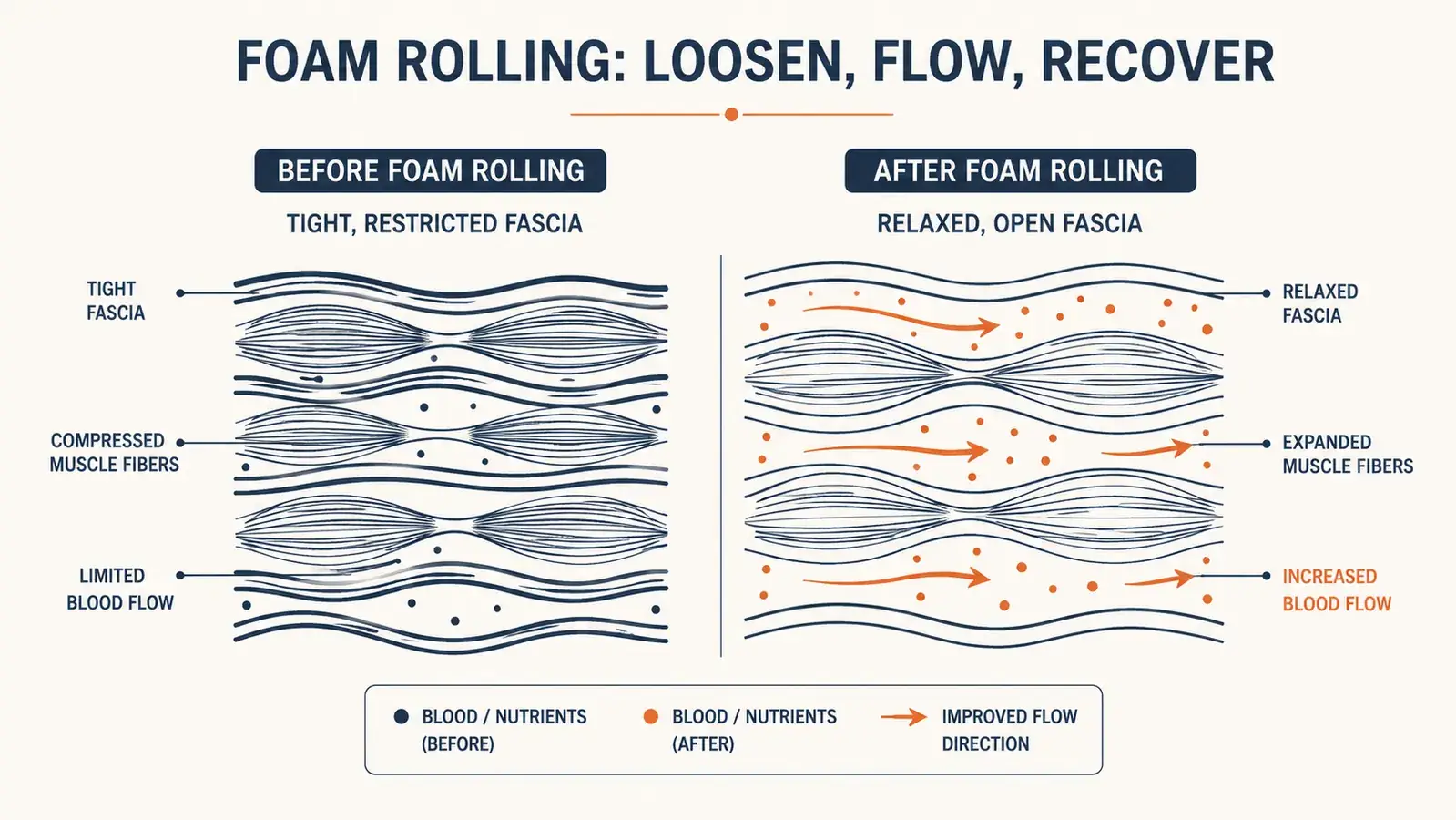
After hard training, metabolic byproducts accumulate in worked muscle tissue. Light compression from rolling encourages lymphatic movement and blood flow through the area, helping clear those byproducts. It's not a dramatic effect, but it's consistent. The sessions where I rolled afterward felt noticeably less congested the next morning compared to sessions where I skipped it and went straight to the couch.
It Reduces DOMS When Done Immediately After Training
Delayed onset muscle soreness peaks around 24 to 48 hours after a hard session. Rolling within the hour after training, when the tissue is warm and blood flow is still elevated, appears to reduce DOMS severity in multiple studies. I noticed this most clearly on leg day. Rolling quads and hamstrings for three minutes post-lift made the next-day stiffness noticeably more manageable, especially when I had to train again the following day.
It Builds a Mental Transition Between Training and Recovery Mode
This one is underrated. Post-workout rolling forces you to slow down for two or three minutes in a focused, quiet way. That transition matters physiologically. You shift out of sympathetic overdrive faster, which improves the quality of the recovery window that follows. I started treating the post-roll as a deliberate cooldown, and it changed how the rest of my evening felt on training days.
Consistent Rolling Over Weeks Reduces Chronic Tightness Spots
The pre/post routine compounds. Most people who stick with rolling for a month notice that certain chronic tight spots become less reactive. For me it was my left hip flexor. After about three weeks of rolling it both before and after training, the constant pulling sensation I'd had for months was significantly reduced. The <a href="/triggerpoint-core-foam-roller-review-long-term" rel="noopener">full TriggerPoint CORE review</a> goes into more detail on how three months of consistent use changed my mobility compared to the rollers I'd used before.
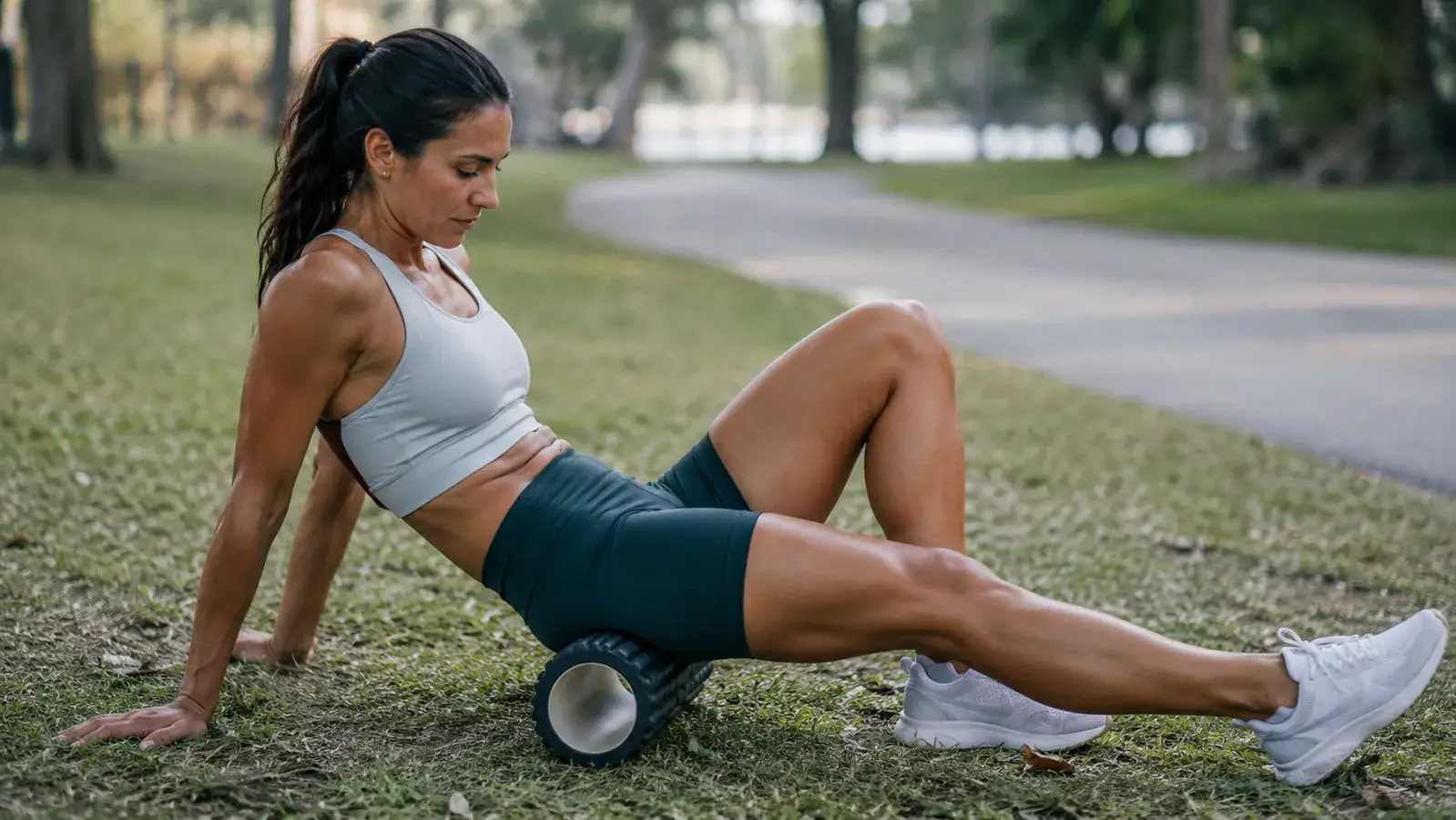
It Helps Identify Problem Areas Before They Become Injuries
Rolling slowly over muscle groups before a session is a good early warning system. If something is notably more reactive on one side, or if a specific spot lights up with more tenderness than usual, that's information. I've changed planned workouts several times because pre-roll feedback told me something wasn't right that day. It's not a diagnosis, but it's a useful body check that takes less than two minutes.
It Costs Nothing Extra Per Session Once You Own a Good Roller
Massage guns, compression boots, infrared saunas. Most recovery tools either cost a lot upfront or require ongoing costs. A foam roller is a one-time purchase that lasts years if you buy a quality one. The TriggerPoint CORE is budget-friendly and I've had mine for over a year with no visible wear. For the number of recovery minutes it provides, the cost per session is effectively zero.
It Works for Every Training Style Without Modification
Whether you lift, run, cycle, or do court sports, the pre and post rolling routine transfers cleanly. The specific areas you target change based on the workout, but the mechanism and tools are the same. That versatility matters if you cross-train or switch between activities. I use the same TriggerPoint CORE on upper back after a bench press session and on calves after a long run. One tool, consistent return across all of it.
What I'd Skip
Aggressive rolling directly on the IT band is a common mistake and it's not doing what people think. The IT band itself is dense connective tissue, not muscle. Grinding on it with a hard roller doesn't lengthen or release it. The more useful approach is to work the tissue around it: lateral quad, outer hip, and glute med. If you've been rolling your IT band and getting limited results, the technique guide on how to foam roll a tight IT band explains what to target instead. Also skip foam rolling directly on the lower back. It's not the right tool for that area. Stick to thoracic spine, hips, and extremities.
The sessions where I rolled afterward felt noticeably less congested the next morning. It wasn't dramatic. It just consistently worked.
Two minutes before and two minutes after. That's all it takes to feel the difference by next week.
The TriggerPoint CORE's softer compression makes it easier to stay on tight spots long enough for them to actually release. Check today's price and see what nearly 8,000 buyers have to say.
Amazon Check Today's Price on Amazon →